Licences & work
Truck licence training on the Kāpiti Coast and in Ōtaki
Drivers from Ōtaki, Waikanae, Paraparaumu and the rest of the Kāpiti Coast can train with One Stop for a Class 2, Class 4 or Class 5 truck licence. Most rigid vehicles over 6,000 kg gross laden weight need Class 2. Get the learner licence first, then the approved course gives you a certificate for your full licence with no practical test.
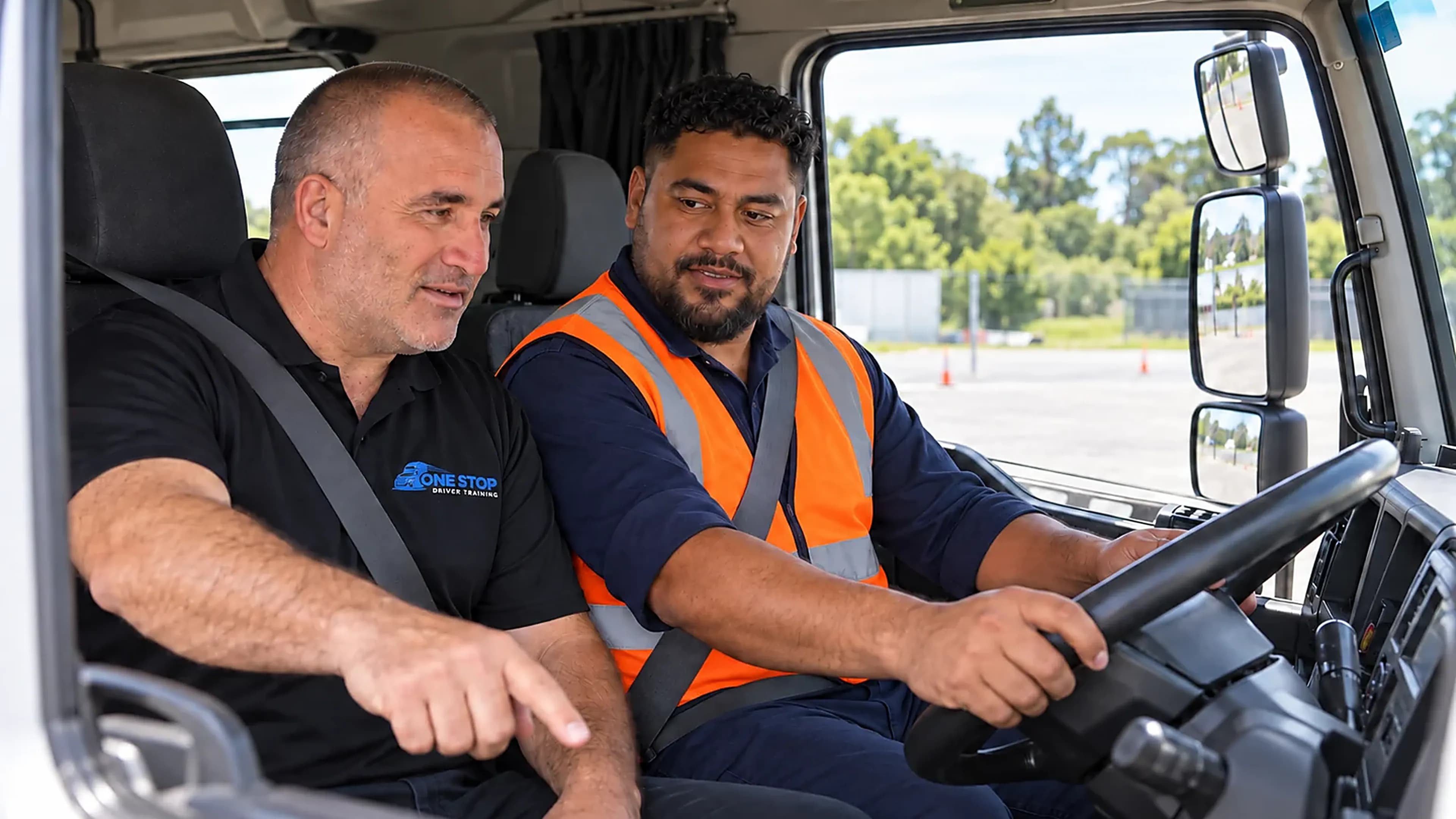
If you drive a car or a trade van for work on the Kāpiti Coast, a truck licence is the next step up. The trigger is usually weight. Once a vehicle goes past what your car licence covers, you need a heavy licence class.
This guide covers the Class 1 limits, where to start, what to sort out first and how the course runs. One Stop trains drivers from Ōtaki, Waikanae, Raumati, Paraparaumu and Paekākāriki. The venue and dates are confirmed when you book, and prices include GST.
When does a work vehicle need a truck licence?
A full Class 1 car licence covers vehicles up to 6,000 kg gross laden weight (GLW) or gross combined weight (GCW). On a learner or restricted car licence, the limit is 4,500 kg. Above that, most vehicles need a heavy licence class, starting with Class 2.
A full Class 1 has two extras. It covers a zero-emission vehicle with a GLW of 6,001 to 7,500 kg, and a tractor driven at 40 km/h or less with a GLW of 6,001 to 18,000 kg.
To find a vehicle’s weight, check its certificate of loading. Vehicles over 3,500 kg have one, usually on the front windscreen, showing the GVM or GCM. Don’t use the empty (tare) weight or the RUC licence weight.
Which class should a Kāpiti driver start with?
Start with Class 2. Every other heavy class builds on it. Class 3 and Class 4 learner licences need a full Class 2 first, and Class 5 needs a full Class 4.
With Class 2 you can also tow a light trailer of 3,500 kg or less behind a rigid truck of up to 18,000 kg, and that trailer doesn’t count towards the GCW. Each step after Class 2 needs 6 months on the full class below, or 3 months if you’re 25 or older.
| If you’ll drive | You need |
|---|---|
| A rigid truck of 6,001 to 18,000 kg GLW | Class 2 |
| A rigid truck over 18,000 kg GLW with two axles or fewer | Class 2 |
| A combination of 12,000 kg GCW or less (not a tractor and trailer) | Class 2 |
| Any other rigid truck over 18,000 kg GLW | Class 4 |
| A combination of 12,001 to 25,000 kg GCW | Class 3 (One Stop doesn’t list a Class 3 course, so ask the team) |
| A combination over 25,000 kg GCW | Class 5 |
Source: NZTA: Driver licence classes and what you can drive · NZTA: Heavy vehicle learner licence (stage 1)
Planning your training? Choose class 2 training and check the options for your next step.
What do you need before the course?
You need the learner licence for your class before the course starts. Apply at a driver licensing agent such as AA or VTNZ. For Class 2, you must have held a full Class 1 licence for at least 6 months.
The medical certificate must be the original, no more than 60 days old, from a New Zealand-registered GP, registered nurse, nurse practitioner or specialist. Ask for the NZTA “Medical certificate for driver licence”.
The theory test has 35 questions and you need 33 right. You can sit it in English or another language, including Māori, Samoan, Tongan, Hindi, Punjabi, Chinese and Korean. If reading is hard for you, ask for extra time or an oral test. One Stop can also help you get the learner licence for an extra cost.
- A completed application form and evidence of identity
- An eyesight check at the agent
- A medical certificate, unless you’ve given one for classes 2 to 5 in the last five years
- The theory test for Class 2 or Class 5 (Class 4 has no theory test)
- Your signature, a photo and the fee
Source: NZTA: Heavy vehicle learner licence (stage 1) · NZTA: Heavy vehicle driver licensing application requirements
How does the course get you to a full licence?
The course replaces two things: the 6-month learner wait and the practical test. NZTA says you can do an approved course any time after you get your learner licence. You then take the course certificate to a licensing agent instead of sitting a test.
One Stop’s course runs over up to three days. The logbook day spends at least 7 hours on fatigue, work time and logbooks (unit standard 24089). The class day gives at least 5 hours of training and theory for your class. The practical assessment is arranged with the team and is sometimes on day two.
If you’d like more practice before the assessment, extra practical training is available at an extra cost.
Training in your own work truck
If your business already runs a truck, you can ask to train in it. The truck has to be heavy enough for your class. For Class 2 it must weigh over 6 tonnes loaded, and for Class 4 over 18 tonnes loaded.
On the day, the truck must carry at least half its payload, with suitable restraints. For Class 5, the truck and trailer together must be over 25 tonnes loaded, and they’re weighed at a weigh station before use. Send a request when you book. Your place is confirmed once the team has checked the vehicle.
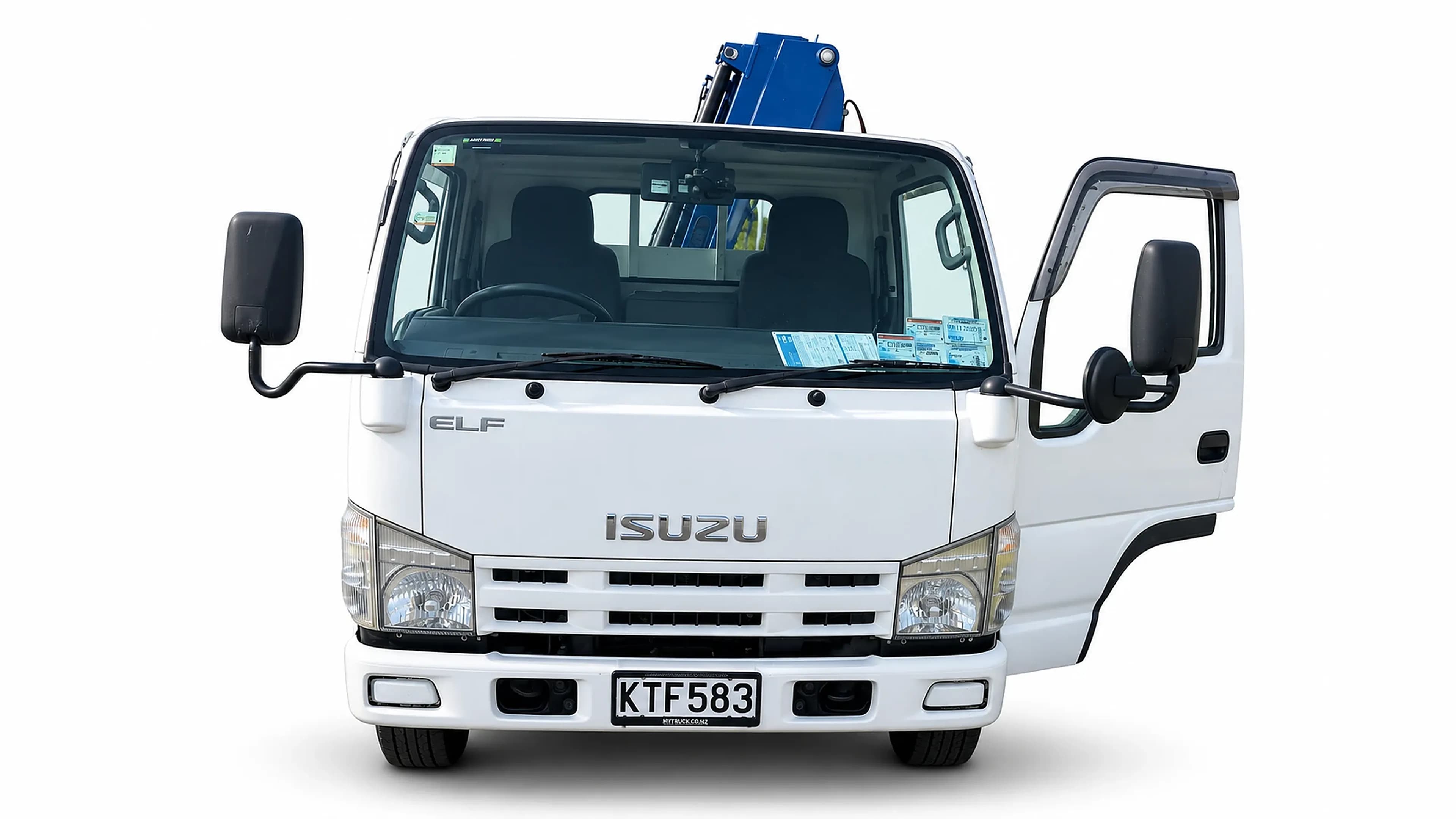
No suitable truck? Train in the One Stop truck instead. For Class 2 it’s a manual Isuzu.
Class 2, 4 and 5 course prices
Class 2 costs $1,400.00 in the One Stop truck or $1,150.00 in your own, including GST and the logbook day. Class 4 is $1,450.00 or $1,200.00. Class 5 is $1,900.00 with the One Stop truck, or $1,300.00 with your own truck and trailer.
Finished the logbook unit standard in the last 12 months? Then Class 4 and Class 5 cost less: $940.00 and $1,440.00 in the One Stop truck, or $800.00 and $840.00 in your own. One Stop checks your NZTA course certificate first. For Class 2, the logbook day is always included.
NZTA fees and the medical certificate are extra. The Class 2 cost guide adds them up.
Booking drivers from a Kāpiti business
Employers on the Coast can book one driver or several. Send the number of drivers, their current licence classes and your preferred dates through the course page or the contact page. Say which truck each driver will train in.
Before you lock in dates, check that each driver will have the learner licence for their class in time. If a driver also needs forklift, dangerous goods or wheels, tracks and rollers training, plan those as separate courses.
Where do Kāpiti drivers train?
The venue and dates are set for each session and confirmed when you book. Tell the team which part of the Coast you’re coming from, such as Ōtaki, Waikanae, Paraparaumu, Raumati or Paekākāriki, and ask where the practical assessment happens. One Stop also trains drivers from Levin and Palmerston North.
Common questions
Can I drive a 7-tonne work truck on my car licence?
Usually not. A full Class 1 licence covers up to 6,000 kg GLW, so a rigid truck over that needs Class 2. The exception is a zero-emission vehicle of 7,500 kg GLW or less, which a full Class 1 covers.
Do I need a medical certificate for a Class 2 licence?
Yes, unless you’ve given NZTA one for classes 2 to 5 in the last five years. It must come from a New Zealand-registered health practitioner and be no more than 60 days old when you apply.
Source: NZTA: Heavy vehicle driver licensing application requirements
Is there a theory test for Class 4?
No. Class 2, Class 3 and Class 5 learner licences need a theory test, but Class 4 doesn’t. Class 5 also skips it if you’ve already passed the Class 3 theory test.
How long does it take to go from a car licence to full Class 2?
You need a full Class 1 for at least 6 months first. Then get your Class 2 learner licence and book the course, which runs over up to three days. With an approved course there’s no 6-month learner wait.
Source: NZTA: Heavy vehicle learner licence (stage 1) · NZTA: Approved heavy vehicle courses
Sources and further reading
- NZTA: Driver licence classes and what you can drive
- NZTA: Heavy vehicle learner licence (stage 1)
- NZTA: Heavy vehicle driver licensing application requirements
- NZTA: Approved heavy vehicle courses
Check the linked official guidance when planning an application or test. A training booking is separate from applying for a licence.