Parents & learners
Fear of driving: practical steps back to confident driving
If you hold a licence but avoid driving, build back up in small steps: a quiet car park, familiar streets, busier roads, then highways. Move on only when the step you’re on feels routine. A one-to-one lesson lets you set the starting point, and if anxiety is severe or affecting daily life, talking to a GP or health professional can help.
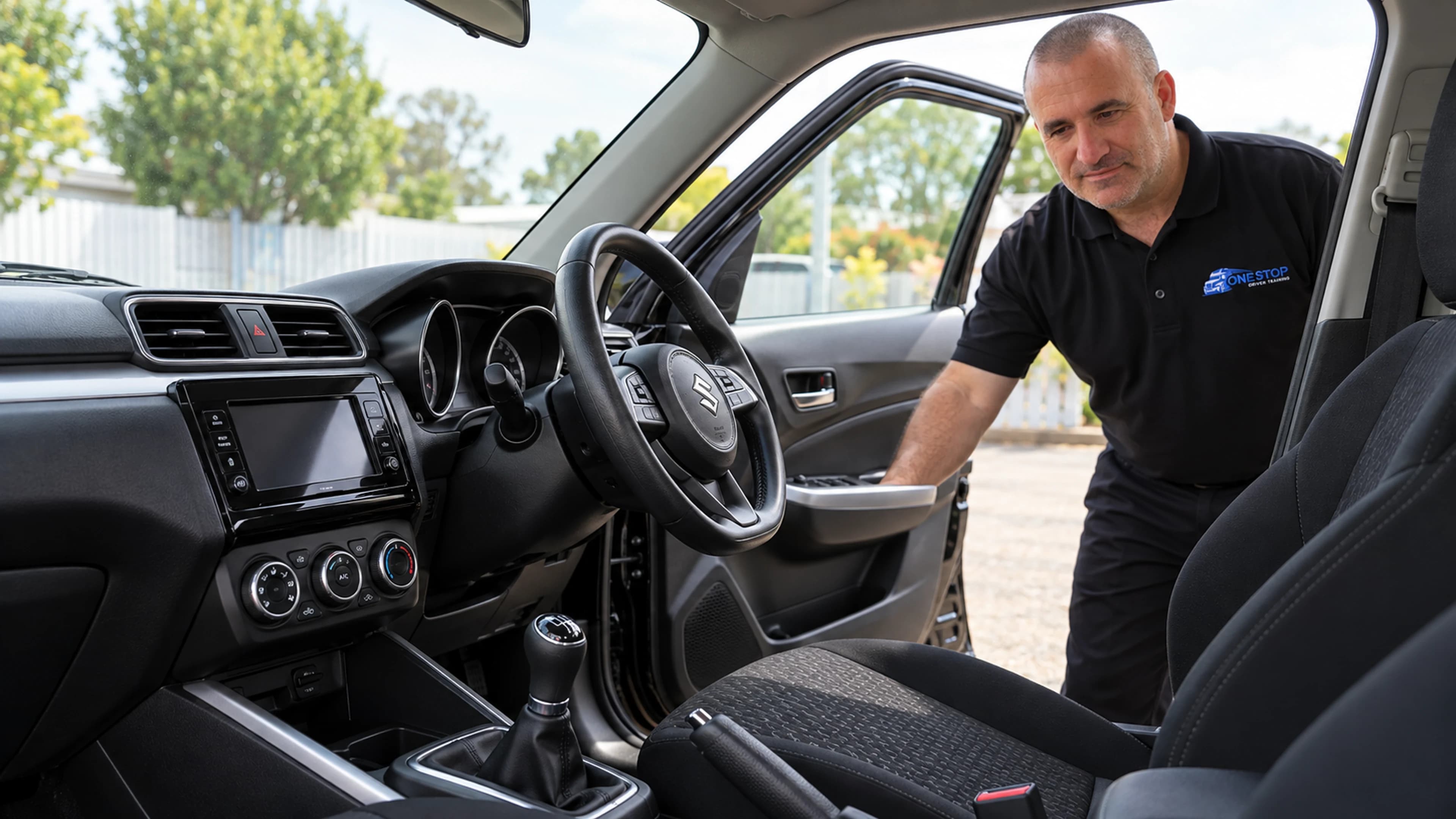
You can hold a full licence and still dread driving. Some people avoid it altogether. Others avoid one thing, such as highways, roundabouts or parking with people watching.
This guide is for licensed drivers who want to drive again with less dread. It’s practical driving advice, not medical advice. If you’re a nervous beginner, the guide for anxious learners fits you better. If you’re simply out of practice, the returning to driving guide covers licence checks and a restart plan.
Why do licensed drivers develop a fear of driving?
Usually something sets it off: a crash or near miss, a long break, a move to a new town or country, or one bad drive. Naming yours helps you plan. Write down what set it off, the trips you now avoid and the ones you still manage.
Avoiding a road can make the next attempt feel bigger, so the steps in this guide start small. The aim isn’t to feel no nerves at all. It’s to make the trips you need, safely, with nerves you can manage. Use the table to pick a first step that fits what set it off:
| What set it off | A useful first step |
|---|---|
| A crash or near miss | A quiet drive away from where it happened, at a time you choose |
| A long break | Get to know the car again while parked, then a short loop of familiar streets |
| A move from overseas | Practise keeping left on quiet streets before busier roads |
| Fear of highways or merging | Busier town roads first, then a short highway section |
| Fear of parking | An empty car park, then quiet street parking, then busier car parks |
When should you talk to a GP about driving anxiety?
If anxiety is severe, or it’s affecting your sleep, work or daily life, talking to a GP or another health professional can help. That’s true with or without lessons. A driving instructor teaches driving; they don’t treat anxiety.
The same goes after a crash where you were hurt, or if you still feel shaken long afterwards. A health professional can help with the fear, and lessons can help with the driving.
If a health condition or medicine might affect your driving, ask your health professional before you get back behind the wheel.
Planning your training? Choose full licence preparation and check the options for your next step.
What are the steps back to confident driving?
Build up in four steps, and stay on each one until it feels routine. Routine doesn’t mean calm. It means you could do it again tomorrow without much worry. Some people move through a step in one drive, and others take several. Both are fine.
Repeat each step on different days before you add the next. If a step goes badly, drop back one, finish on something you can do, and try again next time.
| Step | Where | What you practise | Move on when |
|---|---|---|---|
| 1 | A quiet car park | Moving off, stopping, turning and slow parking | You could do it again tomorrow |
| 2 | Familiar quiet streets | Short loops near home, turns, intersections and giving way | You can drive the loop without prompts |
| 3 | Busier roads in town | Roundabouts, traffic lights, lane changes and street parking | You’re choosing your own gaps |
| 4 | Highways and expressways | Joining, keeping a safe gap, passing trucks and exits | You want to try a longer section |
How can a one-to-one lesson be shaped around your fear?
You and the instructor set the starting point together. A one-hour, one-to-one lesson doesn’t have to begin on a busy road. It can start parked, with a talk about what you want to be able to do, then a short, easy loop and a review.
If driving to the lesson is part of the problem, ask for a pickup. Pickup or a meeting point is confirmed for each session. Things you can ask for:
- Start somewhere quiet and stay there until you’re ready to move on
- Drive the same short route twice, so the second time is familiar
- Hear what’s coming up early, one instruction at a time
- Agree how you’ll say you want to stop, and let the instructor choose a safe place to pull over
Should you use your own car or the instructor’s car?
Either works. Your own car is familiar, and practising in it means the skills carry straight over to your everyday driving. It needs a current WoF, and automatic or manual are both fine.
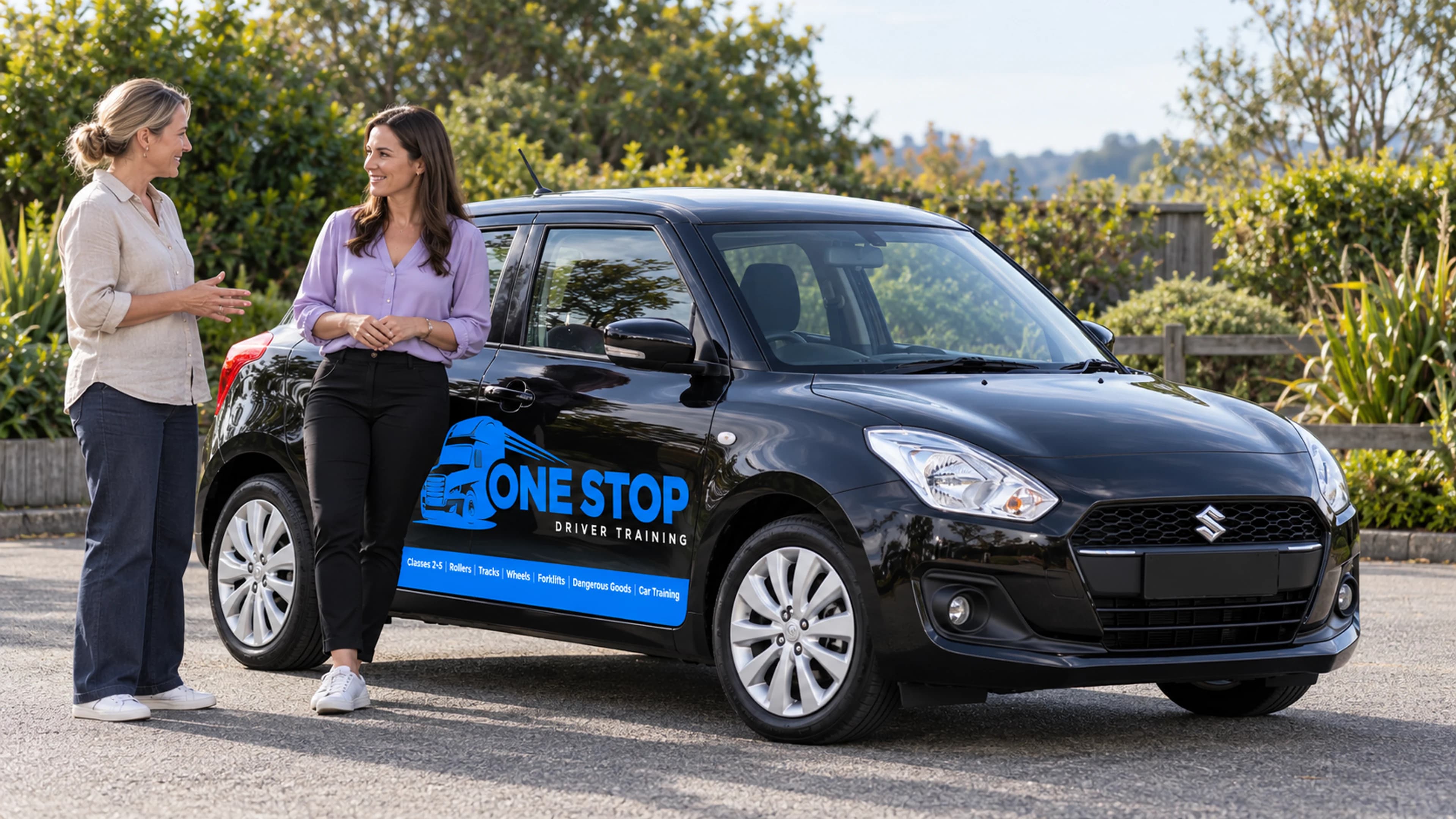
A different car may feel like a fresh start if your own car is tied to a bad experience. A one-hour lesson is $80.00 in the One Stop car or $80.00 in your own car, including GST. Lessons run in Palmerston North, Levin, Ōtaki, Paraparaumu and the Kāpiti Coast.
Can VR be a first step for a nervous driver?
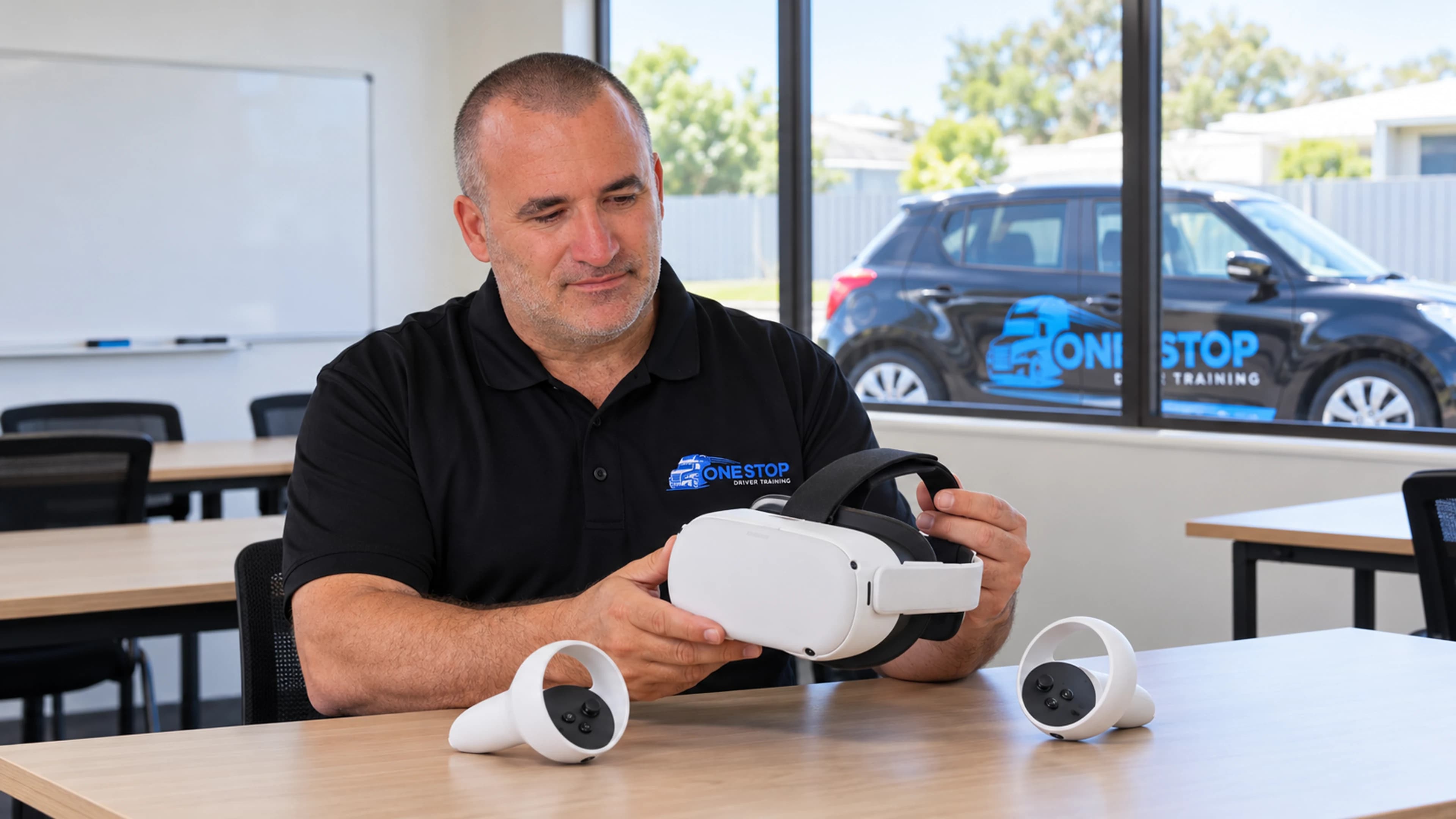
For some people, yes. VR driver training lets you work through driving scenarios and practise spotting hazards in a virtual setting before you take those skills onto the road. You can repeat a tricky scenario, such as a roundabout or merging, as often as you need.
Each session is about an hour. Ten sessions are recommended, and one-off sessions are available if there are spaces. One session is $25.00 and ten sessions are $250.00, including GST. The location is shown with each session date.
VR doesn’t replace driving on the road, and it isn’t a treatment for anxiety. Think of it as a warm-up before the on-road steps.
What should you tell your driving instructor?
Tell them enough to plan the lesson, and no more than you want to share. You don’t need to explain your whole history. These details help most:
- What set it off, in a sentence, if you’re happy to share
- The trips and tasks you avoid, and the ones you still manage
- Your goal, such as driving to work, the school run or a highway trip
- How you like instructions: early, one at a time, or explained while parked first
- Anything a health professional has told you that affects your driving
What if the road rules have changed since you learned?
Check the current rules first. If you learned years ago or in another country, some rules may be new to you. The road code covers the current NZ rules, so a read before you drive can take the guesswork out of intersections and roundabouts.
If you’ve moved from a country that drives on the right, practise keeping left on quiet streets before busier roads. Driving on the left is the first tip NZTA gives new residents.
If you’re on a restricted licence and avoiding driving, note the changes from 25 January 2027. There’ll be no practical test for a full car licence, and for drivers under 25 the restricted period drops from 18 to 12 months. With no second test to prepare for, the practice you choose on your restricted matters more.
Source: NZTA: The official New Zealand road code · NZTA: Driving on NZ roads (visitors and new residents) · NZTA: Changes to getting a car licence
Common questions
Will driving lessons get rid of my fear of driving?
Lessons give you planned, safe practice with feedback, so tasks you avoid can become familiar. They aren’t a treatment, and no instructor can promise the fear will go. If anxiety is severe or affecting daily life, talk to a GP or health professional.
How many lessons will I need?
There’s no set number. Book one lesson, see how it goes, then plan the rest with your instructor. You might want one lesson for a single task, such as merging, or a series that works through each step.
I’m only nervous on motorways. Where do I start?
Start on busier town roads, then add a short highway or expressway section and build from there. The highway and expressway lessons guide sets out a staged plan.
Can I practise with a friend between lessons?
If you hold a full licence, yes. Repeat the last step you managed with your instructor rather than jumping ahead, choose a quiet time and keep the drive short. On a restricted licence, follow your licence conditions.
Sources and further reading
- NZTA: The official New Zealand road code
- NZTA: Driving on NZ roads (visitors and new residents)
- NZTA: Changes to getting a car licence
Check the linked official guidance when planning an application or test. A training booking is separate from applying for a licence.