Parents & learners
VR and on-road driving lessons: different tools, different jobs
VR can provide a setting for discussing scenarios, but it cannot replace learning to drive on real roads. NZTA identifies limits and potential risks in novice-driver simulation. Ask what a session actually teaches, how it connects to on-road learning and what the provider does not claim.
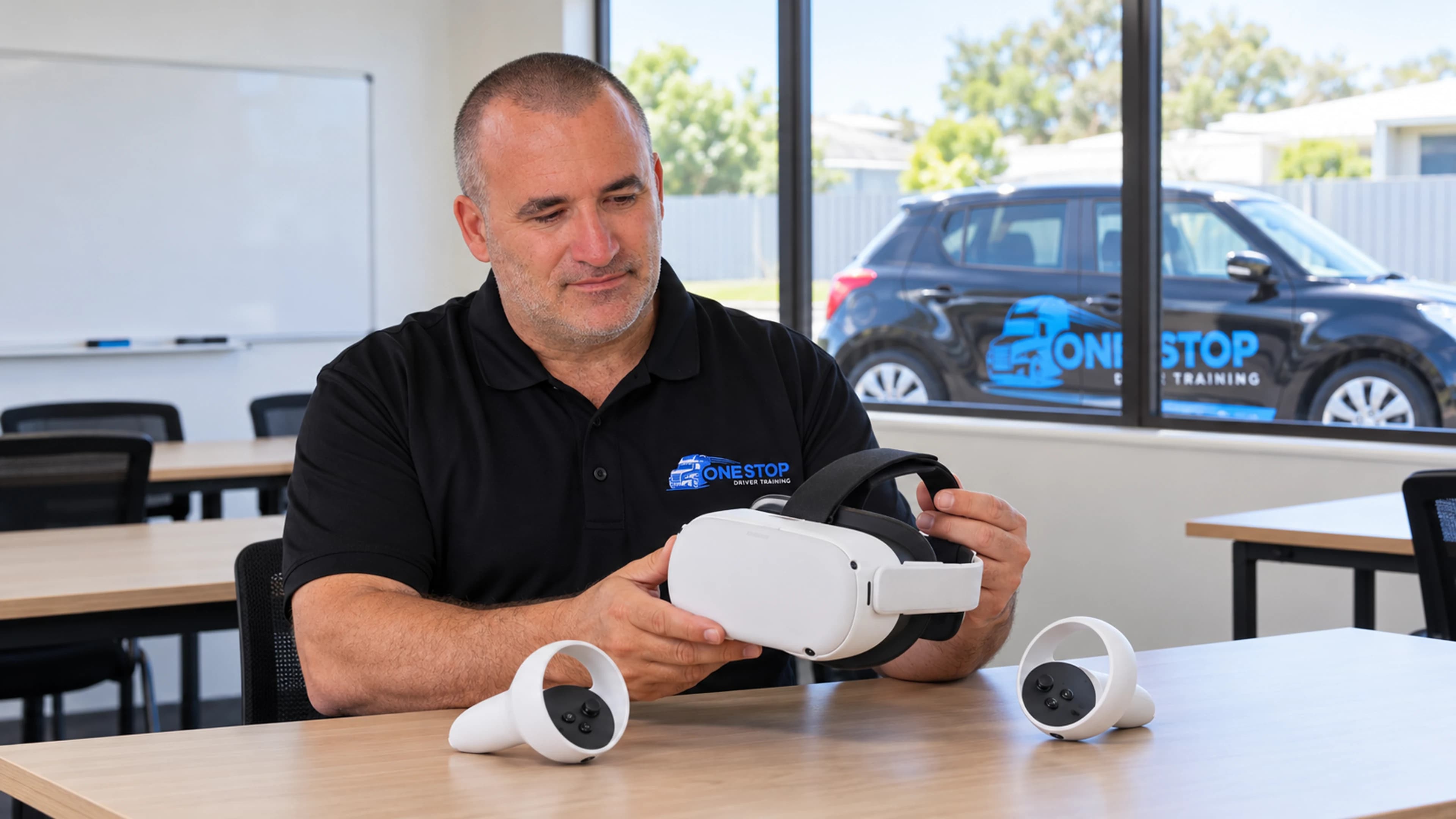
A headset experience and a lesson in a car may both involve driving situations, but they are not interchangeable. Comparing them fairly starts with the learning task, not how impressive the technology looks.
This guide helps learners and parents assess a VR enquiry. It does not claim that One Stop uses particular equipment, that simulator time earns licence credit or that VR treats anxiety. Confirm the actual session arrangements with the team.
Start with NZTA's position on simulation
NZTA's November 2024 position paper says simulation cannot replace on-road novice-driver training. It identifies limitations in reproducing real driving and learning vehicle handling, along with risks such as overconfidence or learning incorrect habits. Those cautions should be part of any honest comparison.
A provider should explain the narrow purpose of a simulation activity and how its limitations will be handled. Ask what the learner is expected to notice or discuss, rather than accepting a broad claim that technology makes someone road-ready. The presence of realistic graphics does not establish that a skill will transfer to a car.
Source: NZTA: Position on driving simulator technology for learner and novice drivers
Separate observing a scenario from controlling a vehicle
A scenario discussion might ask what information matters or how a situation could develop. A real driving lesson also involves the physical vehicle, actual surroundings and decisions with real consequences. Being able to explain an answer while stationary is not the same evidence as carrying out a task appropriately on the road.
When comparing products, ask which activity the learner will actually do. Watching, discussing, operating controllers and driving a car are different experiences. A clear session description should not blur them together. That distinction helps you decide whether the activity addresses the question you are trying to solve.
| Question | VR or simulation enquiry | On-road lesson enquiry |
|---|---|---|
| What will I practise? | Ask for the specific scenario or discussion goal | Ask for the vehicle and road-skill focus |
| How is progress checked? | Ask what the exercise demonstrates and cannot demonstrate | Ask for observable driving feedback |
| What happens next? | Ask how learning is checked in real driving | Agree suitable further practice |
Planning your training? Choose vr training and check the options for your next step.
Ask for a concrete session description
Before booking, ask about the equipment, supervision, accessibility, session length and what happens if the learner wants to stop. A website illustration should not be treated as a promise of the room, group size or headset model. Confirm those practical details directly.
Ask how the session is adapted to someone with little driving experience. If the provider describes an exercise as preparation for a road situation, ask how an instructor will later check the learner's understanding in the relevant setting. The answer should describe a teaching process, not just a score or completion badge.
Keep licence requirements and learning tools separate
NZTA's practical test information assesses real driving skills. A simulation session should not be presented as replacing a practical test or granting permission to drive independently. Check official licensing requirements separately from any training product's description.
The same caution applies to hours or course-credit claims. Do not assume that time spent in a headset counts towards an approved requirement because it is called driver training. Ask for the exact official basis of any such claim. If that cannot be established, evaluate the session solely for the clearly described learning activity.
Source: NZTA: Practical driving tests
Avoid promises about confidence or anxiety treatment
Some people may prefer discussing a situation before trying a real task, but that preference does not establish a treatment benefit. NZTA notes that simulation is used in some particular training circumstances while maintaining its cautions. Do not turn that observation into a promise that a headset will remove anxiety or make road practice unnecessary.
Ask what support is available during the exercise and how to communicate discomfort. If a health issue affects fitness to drive, resolve that through the appropriate professional route. The training decision should be based on a suitable activity and honest limits, not pressure to choose technology as a cure.
Source: NZTA: Position on driving simulator technology for learner and novice drivers
Choose the tool after defining the learning need
Write one sentence describing what you want help with. If the need is controlling a car, discussing a virtual scenario alone will not meet it. If the need is to explore a particular decision before a lesson, ask whether a discussion, official learning resource or supervised simulation would be useful.
Drive offers official learning and coaching resources that can support conversations about driving. Compare those with the provider's proposed activity and your available budget. Whatever tool you choose, keep a clear next step: what will be practised, who will give feedback and how learning will be checked in the real task.
Common questions
Can VR replace on-road lessons?
No. NZTA's simulator position says there is no substitute for on-road novice-driver training. Treat any virtual activity as a clearly limited supporting tool and confirm how the provider connects it to real driving.
Source: NZTA: Position on driving simulator technology for learner and novice drivers
Does VR training automatically count as licence practice?
Do not assume it does. Ask for the precise official requirement and evidence supporting any credit claim. A training session and an approved licensing requirement are different things.
What should I ask One Stop before booking VR?
Ask about current availability, equipment, supervision, the specific learning task and how it complements practical lessons. Confirm the actual arrangements rather than relying on illustrative photographs or a general description.
Sources and further reading
- NZTA: Position on driving simulator technology for learner and novice drivers
- NZTA: Practical driving tests
- Drive: Driving lessons for coaches
Check the linked official guidance when planning an application or test. A training booking is separate from applying for a licence.