Licences & work
Forklift certificate vs F endorsement: what is the difference?
A forklift operator certificate and an F endorsement address different needs. Workplace training concerns operating safely in the work environment; F is the driver-licence endorsement for driving a forklift on a road. Identify the actual duties and location before deciding which training and licence checks apply.
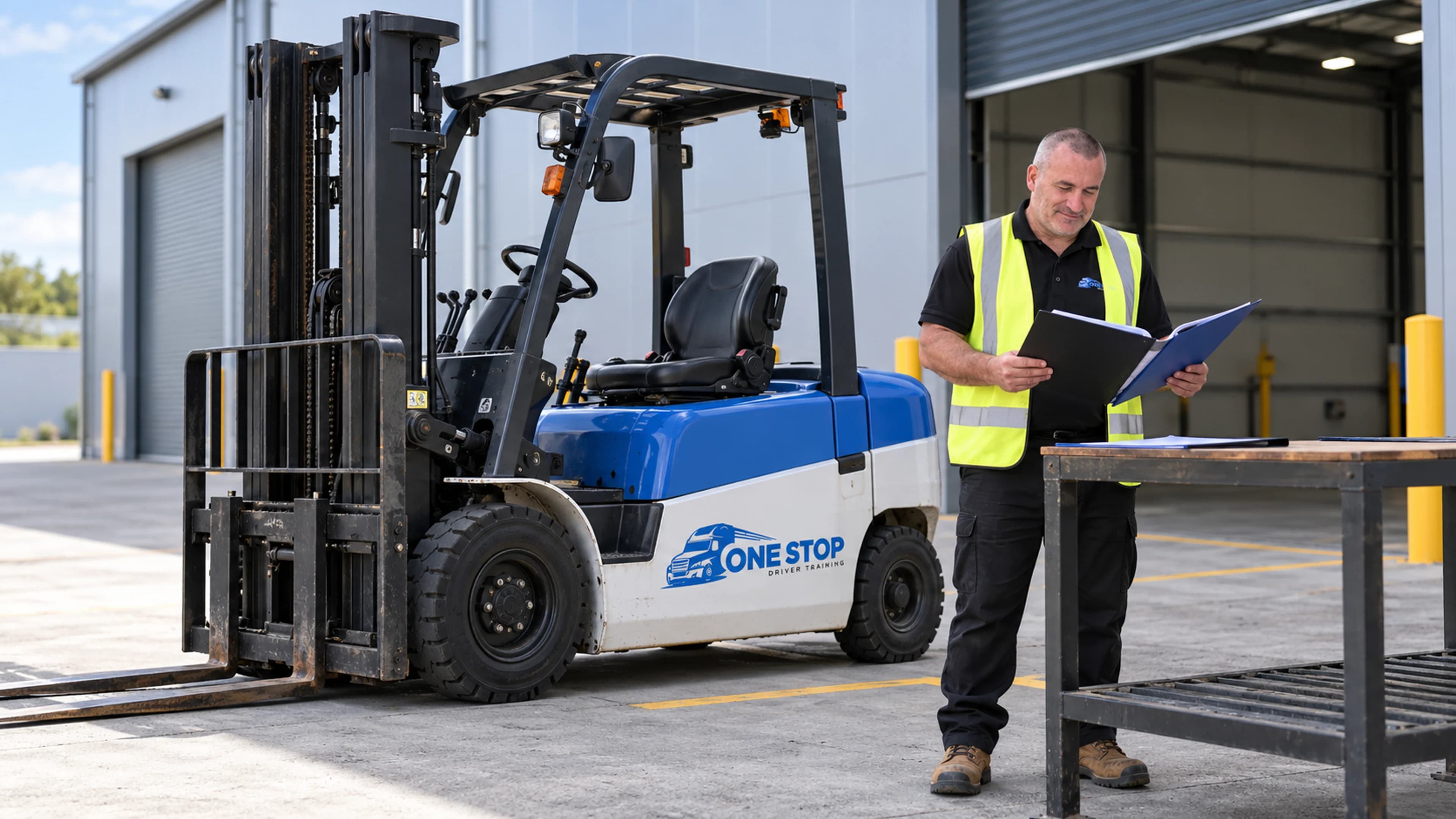
People often say forklift licence when they mean different documents. That can lead to a booking that does not match the employer’s needs, or an assumption that one certificate covers every part of the job.
Before enquiring, ask the employer what you will operate, where you will operate it and which evidence they expect. Bring those answers into the training discussion rather than choosing a course from its shortest title.
Give each document its correct name
NZTA requires an F endorsement for driving a forklift on a road. An operator-training certificate is a separate piece of evidence about workplace training. Neither label should be used as shorthand for every requirement that might apply to a worker.
Ask a provider to list the exact outputs of the proposed course. Will it address operator training, the endorsement course, or both? What assessment is involved, and what further application is needed? Written answers make it much easier to compare quotations and prevent a supervisor and trainee from expecting different outcomes.
Map the route through the workplace
Draw the places where the forklift will travel: storage areas, loading areas, shared access, customer spaces and any connecting route. Mark where the route or access arrangements are unclear, then ask the employer and provider to resolve those questions.
Do not decide a route’s legal status merely from the fact that someone owns the land. Where there is uncertainty about road-use requirements, seek NZTA guidance using the actual location details. A site sketch and description of public access are more useful than a general statement that the work happens in a yard.
Planning your training? Choose forklift training and check the options for your next step.
Compare training needs before booking
Use the table as a set of questions, not as a certificate checklist that automatically authorises work. A worker may need more than one form of evidence, and the employer needs to understand what that evidence demonstrates.
Ask about the machine used during training and the machine you will use at work. If they differ, discuss how the employer will introduce the workplace equipment and tasks. WorkSafe’s forklift guidance says training may need to suit the individual work environment; it also flags that its older code must be read alongside current requirements.
| Area | Question to resolve |
|---|---|
| Operator training | What equipment and work tasks does the assessment cover? |
| F endorsement | Will road driving form part of the job? |
| Licence class | Does the worker hold the appropriate entitlement for this vehicle? |
| Workplace introduction | Who will confirm readiness for the actual site? |
Source: WorkSafe: Forklift training
Describe the job instead of collecting labels
Explain whether you are new to forklifts, returning after a break or familiar with a different operation. Tell the provider about the work environment and any attachments or unusual tasks the employer has identified. This helps establish the scope of the enquiry without pretending that all forklift work is identical.
If your employer asks for an OSH certificate, ask what they mean by that term and what evidence they accept. Keep the provider’s course description with the booking. Do not assume an informal phrase tells you whether road-endorsement training, practical assessment or site familiarisation is included.
Prepare an introduction for the first shift
Ask for a named supervisor and a clear explanation of the work you will initially be assigned. Bring questions from training into that conversation, especially when the workplace equipment or layout differs from what you practised.
A useful introduction allows time to understand local arrangements before production pressure takes over. Discuss how to report damage, uncertainty or a change in conditions, and how further support can be requested. These are planning prompts for the employer’s process, not operating instructions. The aim is to make it easy to raise a concern before somebody expects you to improvise.
Keep a useful record of what you have completed
Store your course documents where you and the employer can find them, with the provider, assessment date and stated scope. Record any follow-up application separately. If you change employers, take the evidence with you but expect a conversation about the new operation.
When work changes, review the training needs again. A different machine, attachment, site or set of duties can make earlier assumptions unhelpful. Ask what additional instruction or assessment is appropriate rather than treating the existence of a certificate as the end of the discussion.
- Clarify the employer’s requested course outcome.
- Identify road-use questions before booking.
- Compare the training and workplace equipment.
- Confirm who provides the site introduction.
- Retain documents and review needs when duties change.
Common questions
Is an F endorsement the same as a forklift operator certificate?
No. F relates to driving a forklift on a road. Operator-training evidence concerns workplace training and its stated scope. Ask which outcome a course provides before booking.
Will one certificate let me use any forklift at any workplace?
Do not assume that. Discuss the particular machine, tasks and site with the employer, including the introduction or further training needed when the equipment or work changes.
What should I send with a training enquiry?
Your present licence details, experience level, the employer’s requested outcome and a description of the equipment and work location. Include any uncertainty about road use so it can be resolved early.
Sources and further reading
Check the linked official guidance when planning an application or test. A training booking is separate from applying for a licence.