Licences & work
Civil construction licences and endorsements in NZ
Civil construction work can involve several separate requirements: the right driver licence for the vehicle, a relevant W, T, R or F road-use endorsement, competence with the actual plant and the worksite’s induction or task controls. There is no single all-purpose civil construction licence. Start with the machine, where it will operate and the tasks you will perform.
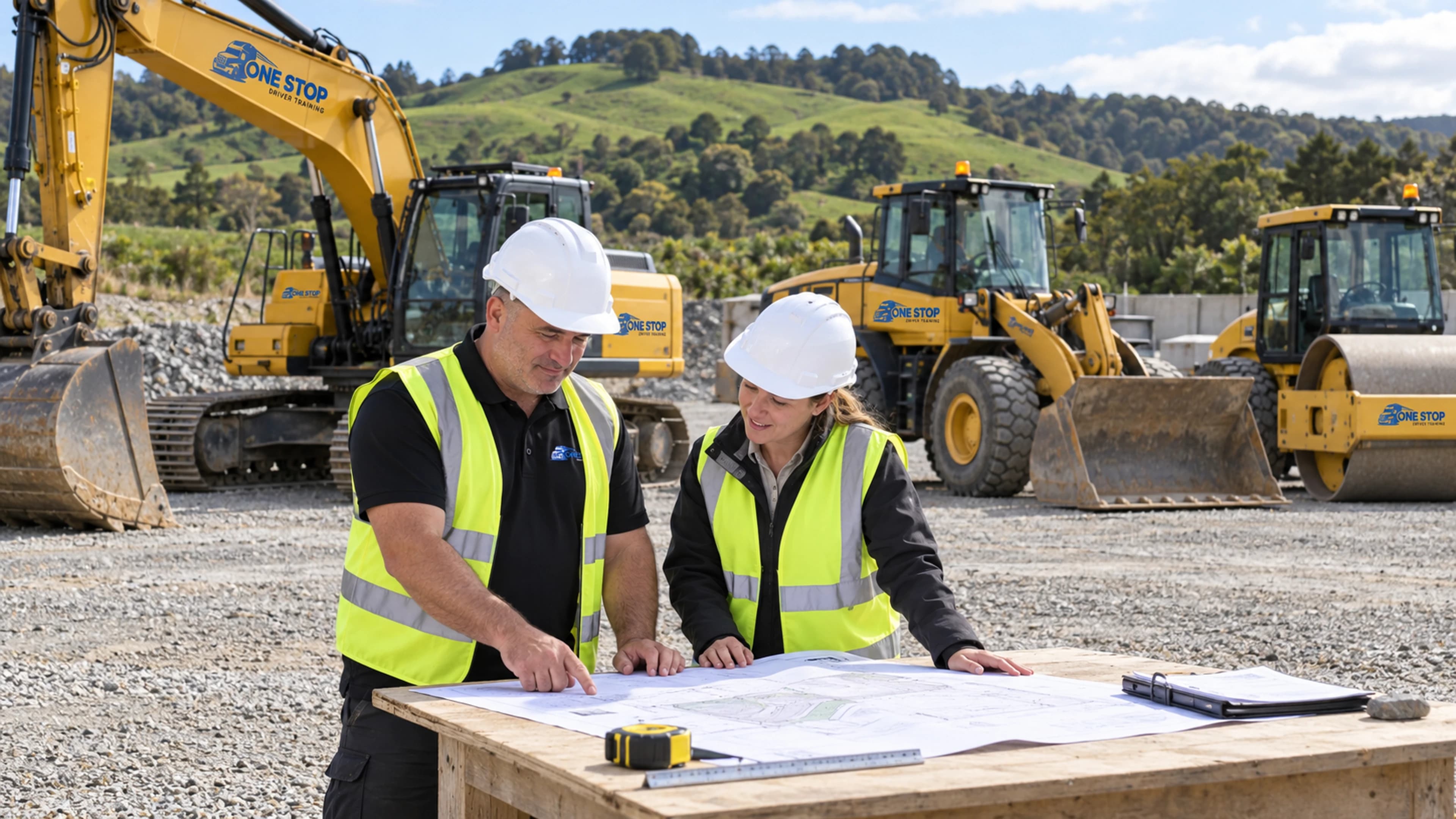
A civil role may combine driving a truck, moving plant and working around excavations or traffic. Advertisements sometimes group several requirements into a short line. Treat that line as a list to clarify, rather than assuming one certificate covers everything mentioned.
This guide helps an applicant or career changer map those requirements before buying training. It is not an employer’s whole safety system or a machine-operating manual. The aim is to identify which authority or employer can answer each question and which course enquiry would address the actual gap.
Build a task list before making a course list
Ask what you will personally do in the first weeks. Driving a tipper, transporting plant, operating a roller and unloading with a forklift are distinct tasks. Record the machine or vehicle, whether it will use a road, the location and the level of supervision available. Avoid starting with a shopping list of tickets.
For example, an advertisement mentioning truck and machine work leaves several questions unanswered. Which truck and trailer? Which type of machine? Does it move between sites under its own power? Who introduces the attachments? A few specific answers can prevent paying for unrelated endorsements while overlooking training the actual job needs.
| Requirement | What it answers | Where to check |
|---|---|---|
| Driver licence class | Am I licensed for this vehicle configuration? | NZTA vehicle-class guidance and the vehicle details |
| W, T, R or F endorsement | Does road use of this special-type vehicle need an endorsement? | NZTA endorsement guidance |
| Plant competence | Can I safely perform this task with this machine and attachment? | Employer assessment, instruction and supervision |
| Site access or induction | What controls and access requirements apply at this workplace? | The employer and site controller |
Source: NZTA: Driver licence classes — what you can drive · NZTA: Applying for an R, T or W endorsement for special-type vehicles · NZTA: Applying for a forklift F endorsement · WorkSafe: Road and roadside training, certifications and competency
Keep truck classes separate from plant endorsements
A truck licence class addresses the vehicle configuration covered by that class. W, T and R relate to particular special-type vehicles used on roads: wheels, self-laying tracks and rollers respectively. NZTA also requires the appropriate full licence class alongside the endorsement. The machine’s type, weight and speed can affect that class requirement.
Do not decide from the word digger or loader alone. Ask for the actual machine details and intended road use, then compare them with NZTA’s endorsement table. If a supervisor says that all machines are covered by a truck licence, request clarification before operating. An endorsement and a heavy-vehicle class are complementary where both are needed.
Source: NZTA: Applying for an R, T or W endorsement for special-type vehicles
Planning your training? Choose workplace training and check the options for your next step.
Check whether the operating area counts as a road
For transport law, road can mean more than the public highway. NZTA’s forklift endorsement guidance includes places accessible to the public and notes that an ungated factory yard may fall within the definition. A private owner or worksite sign does not, by itself, resolve the road-use question.
Describe the actual route to the employer or NZTA: the loading area, access gate, connecting driveway and any crossing between areas. Ask who will confirm the legal position and keep that answer with the training plan. This is more reliable than assuming that a brief trip or a location inside a property automatically removes licensing requirements.
Treat forklift F and workplace operator competence separately
An F endorsement concerns driving a forklift on a road, with the appropriate driver licence class also required. NZTA says its approved endorsement course covers driver licensing requirements, while additional workplace safety training may be needed. The course certificate must be followed by the endorsement application; the certificate alone is not the road-use entitlement.
Ask what the forklift part of the civil role actually includes. A forklift used for a specific load or attachment is a different workplace task from moving a truck. Explain your existing experience accurately and ask how the employer will familiarise you with its machine, loads, pedestrian controls and operating area before you work independently.
Ask how the site checks real operating competence
WorkSafe’s road and roadside guidance recommends assessing workers’ current competence and experience before work starts and identifying further training needs. It also discusses supervision and site-access training. A licence or endorsement is therefore one part of the discussion, not proof that someone can immediately perform every task on a civil project.
Ask the employer how it checks an unfamiliar operator, who provides supervision and what happens when the plant, attachment or task changes. Describe areas where you want demonstration or support. The useful question is whether you can perform the assigned work safely in its actual setting, rather than whether a certificate has a familiar course title.
Source: WorkSafe: Road and roadside training, certifications and competency
Distinguish a plant qualification from a short endorsement course
Formal plant-operation qualifications can serve a different purpose from road-use endorsements. NZQA describes the New Zealand Certificate in Infrastructure Plant Operations at Level 3 as preparing people for plant operations on infrastructure worksites under supervision. That is a broader work-learning context than simply adding an endorsement to a driver licence.
Ask whether the job expects an existing qualification, relevant unit standards, supervised development or a combination. Confirm who provides any longer programme and how you gain suitable workplace exposure. Do not assume One Stop offers every qualification mentioned in an advertisement; use a focused enquiry for the truck or endorsement training relevant to its published courses.
Source: NZQA: New Zealand Certificate in Infrastructure Plant Operations — Level 3
Choose the next course from a confirmed gap
Turn the answers into a short plan: current entitlements, missing road-use requirements, practical learning needs and employer or site requirements still to arrange. Ask who pays for each part and what must be completed before starting. Keep quoted course scope separate from duties the employer will teach or assess at the workplace.
For work in Manawatū or Palmerston North, include travel and the planned operating locations when making an enquiry. A useful conversation starts with the actual truck or machine, not simply a request for every civil ticket. If the role changes, update the plan before accepting a different vehicle, attachment or operating task.
Common questions
Is WTR one endorsement that covers every machine?
W, T and R are distinct endorsements relating to particular special-type vehicles on roads. Confirm the machine, road use and appropriate licence class. Do not treat the shorthand WTR as proof that every machine or workplace task is covered.
Source: NZTA: Applying for an R, T or W endorsement for special-type vehicles
Do I need a truck licence as well as a plant endorsement?
The appropriate full licence class is required alongside a relevant road-use endorsement. Which class applies depends on the machine and the conditions in NZTA’s table. Identify the exact equipment and use before choosing a class or course.
Source: NZTA: Applying for an R, T or W endorsement for special-type vehicles
Does an F endorsement replace forklift workplace training?
No. NZTA distinguishes driver licensing requirements from workplace health and safety training. Ask how the employer will assess your skills and introduce its forklift, attachments, loads and operating area. A road-use entitlement does not describe every practical task you can safely perform.
Does every civil site require the same safety card?
Do not assume that a named site-access product is universally required. Ask the employer or site controller which induction, qualifications and training apply to the actual work. WorkSafe’s guidance links training and competence checks with the tasks and workplace.
Source: WorkSafe: Road and roadside training, certifications and competency
Sources and further reading
- NZTA: Driver licence classes — what you can drive
- NZTA: Applying for an R, T or W endorsement for special-type vehicles
- NZTA: Applying for a forklift F endorsement
- WorkSafe: Road and roadside training, certifications and competency
- NZQA: New Zealand Certificate in Infrastructure Plant Operations — Level 3
Check the linked official guidance when planning an application or test. A training booking is separate from applying for a licence.