Licences & work
Dangerous goods endorsement: questions to ask about a driving job
A D endorsement can be relevant to driving work involving dangerous goods, but the requirement depends on the operation and applicable exceptions. Ask about the actual goods and transport arrangements. A licence class, a D endorsement and workplace hazardous-substances training have different purposes.
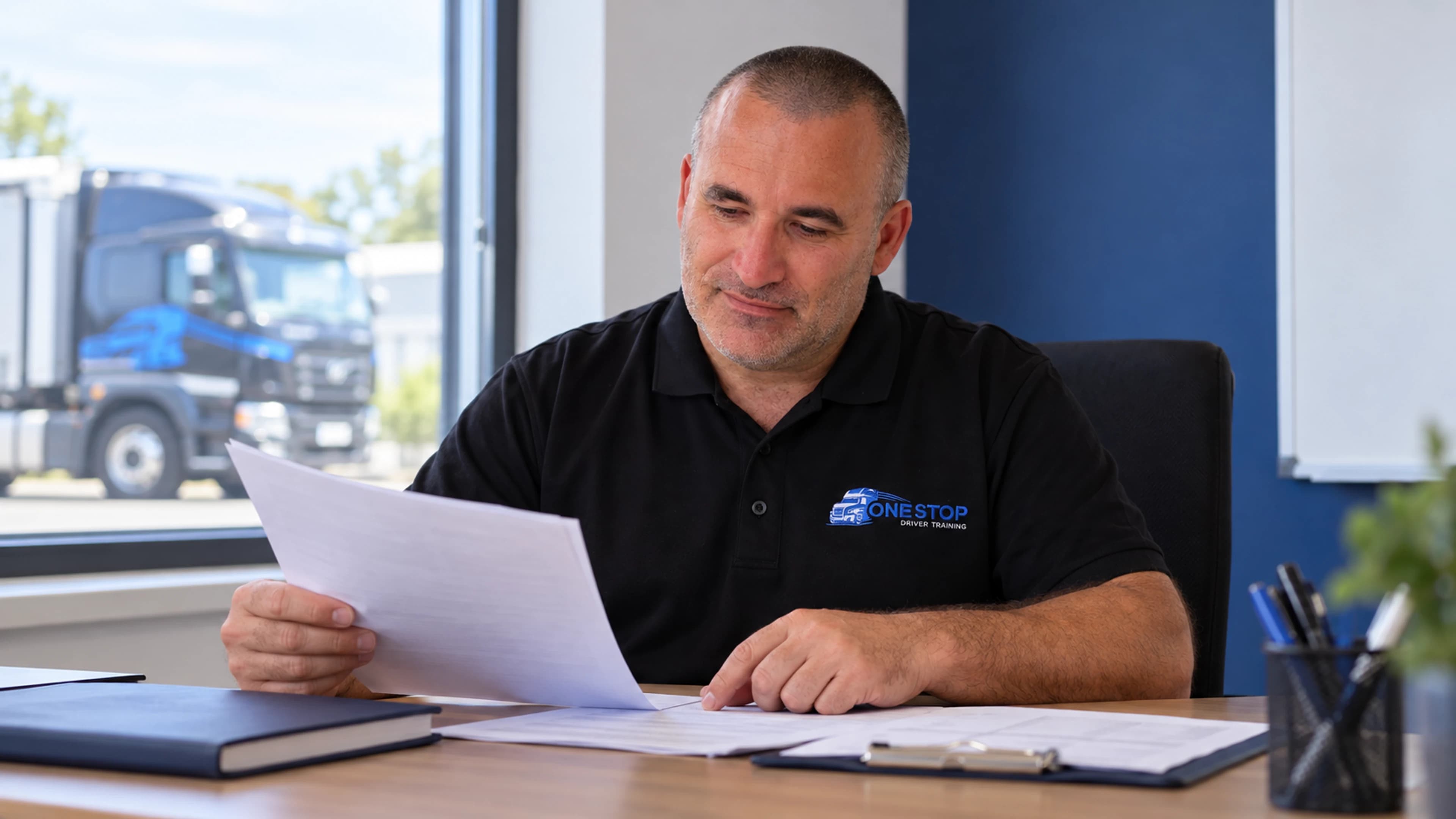
An advertisement mentioning DG can raise two questions: will the job require a D endorsement, and what else will you need to learn? Neither question is answered by the title driver alone.
Use the following checklist to gather information from an employer and prepare a focused training enquiry. It deliberately avoids reducing dangerous-goods requirements to a single quantity rule or a promise that every delivery job needs an endorsement.
Establish what the role actually transports
NZTA’s D-endorsement guidance distinguishes transport circumstances and lists exceptions. That means the answer depends on more than whether a product sounds hazardous. The relevant goods, quantities, packaging and transport purpose need to be considered together.
Ask the employer to identify the goods and the person responsible for confirming the transport requirements. Use actual product and load information in that conversation. Do not decide that an exemption applies from a short social-media explanation or by comparing your load with a different business’s example.
Separate three different training questions
First, identify the vehicle entitlement required for the driving. Second, establish whether the operation requires a D endorsement. Third, discuss the workplace tasks, including any handling duties you will perform. Those questions can overlap without becoming interchangeable.
WorkSafe has separate guidance about training and instruction for hazardous substances. A transport endorsement should not be treated as a complete answer to every workplace duty. Ask the employer which tasks are included in the role and which are handled by other staff, so the training plan matches the real division of responsibilities.
| Question | Who can help clarify it? |
|---|---|
| What vehicle will I drive? | Employer and licence-training provider |
| Does the transport require D? | Employer’s responsible person and NZTA guidance |
| What handling tasks will I perform? | Employer and workplace training lead |
| What remains unfamiliar? | Worker, supervisor and relevant trainer |
Source: WorkSafe: Hazardous substances training and instruction
Planning your training? Choose dangerous goods and check the options for your next step.
Read the advertisement beyond the endorsement
Potential enquiries might involve distribution, service supplies or specialist transport, but the actual duties vary widely. Look for information about loading, delivery locations, paperwork, customer interaction and working arrangements. These details help you judge the role as a whole.
If D is described as preferred, ask whether the employer expects it before application, before a particular assignment or as later development. Do not buy training merely because the abbreviation appears somewhere in an advertisement. A clear response can help you decide the order of your next steps and avoid promising a start date you cannot meet.
Prepare a precise training enquiry
Tell the provider about your current licence, previous training and intended transport work. Ask which course outcomes are offered and what information they need to check suitability. If the employer has identified a requirement, bring that explanation rather than trying to reconstruct it from memory.
Request a complete quotation and the steps after successful completion. Ask how preparation materials are supplied and what support is available if you need extra help with the content. You should understand the process before paying, including what is assessed and what happens if further learning is needed.
Discuss the first assignment in advance
Before taking on a new type of delivery, ask how the employer introduces the operation and checks understanding. Find out where the current procedures are kept, who answers questions and what to do when the information supplied for an assignment is incomplete.
Do not improvise a response to an unfamiliar substance or transport situation from a blog. This article is a planning tool, not an emergency guide. The useful preparation is knowing which company arrangements apply and who is responsible for resolving uncertainty before the assignment proceeds.
Keep the work plan current
Retain your course evidence and record the employer’s instructions about the duties you have been prepared to undertake. If the goods, loading arrangements or vehicle change, ask for the requirements to be reviewed. A familiar route does not mean an unfamiliar load has the same requirements.
Use future training conversations to close specific gaps. You might need clarification about a new task, a document or an administrative step rather than another broadly named course. A good plan links every training item to a reason and identifies what remains outside your current experience.
- Get the goods and transport purpose identified.
- Confirm the D requirement and any claimed exception.
- Check the separate vehicle-class requirement.
- Agree workplace instruction and support.
- Review the plan when loads or duties change.
Common questions
Does every job transporting hazardous products require D?
Do not assume that. NZTA lists requirements and exceptions that depend on the circumstances. Have the actual goods and operation checked before deciding whether the endorsement is needed.
Does D give me a truck licence?
No. It does not replace the vehicle-class entitlement. Identify both the vehicle requirement and the dangerous-goods requirement when planning training.
Can I decide from a job advertisement alone?
An advertisement is a useful starting point, but ask the employer about the actual goods, vehicle and responsibilities. Confirm what must be held before starting and what further workplace instruction will be provided.
Sources and further reading
- NZTA: Applying for a dangerous goods endorsement
- WorkSafe: Hazardous substances training and instruction
- NZTA: Getting a D, F, R, T or W endorsement
Check the linked official guidance when planning an application or test. A training booking is separate from applying for a licence.