Parents & learners
Driver training for schools and students in Manawatū, Horowhenua and Kāpiti
One Stop doesn’t offer a fixed schools package, so a school, careers adviser or youth programme starts by talking to the team about what can be arranged. Options include group VR sessions on hazards and driving scenarios, and one-to-one learner lessons for students who hold a learner licence. Plan around 25 January 2027, when learners under 25 must hold their licence for 12 months before the restricted test, or 6 with an approved course or 60 logged supervised hours.
A driver licence can help a student into a first job or further study, and it makes getting around Manawatū, Horowhenua and Kāpiti much easier. Schools and youth programmes are well placed to help students plan for it.
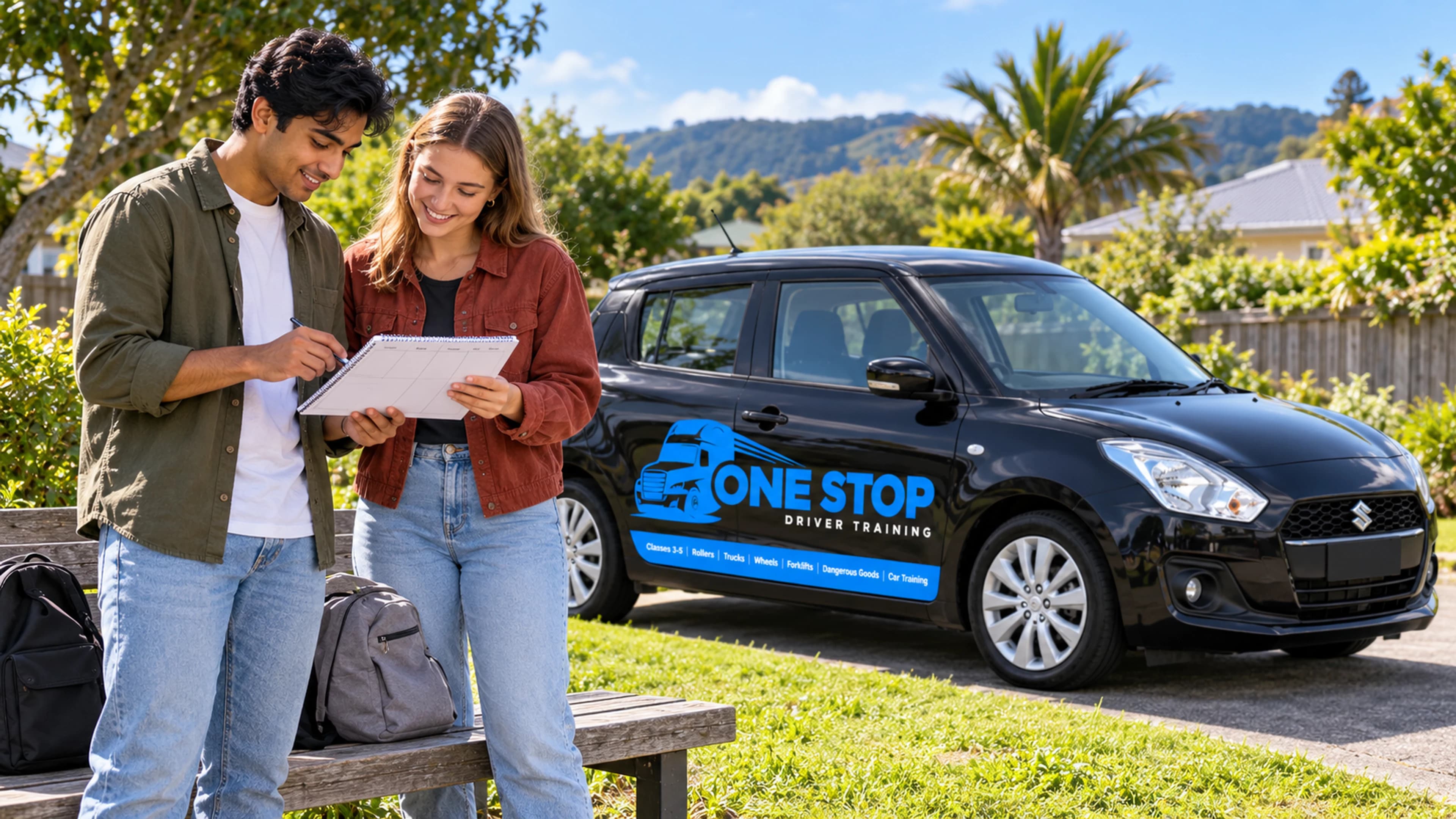
This guide is for secondary school staff, careers advisers, youth and community programme leaders, and parents. It covers the path from learner to restricted licence under the 2027 rules, how VR and on-road lessons could fit a group, what to send One Stop, and consent basics for students under 18.
How does a student go from learner to restricted licence?
A student needs a learner licence first, then a restricted licence, then a full licence. To get a learner licence, they must be at least 16 and pass a theory test. The restricted licence is the first stage that lets them drive without a supervisor, within its conditions.
The road code covers New Zealand’s road rules and safe driving practices, so it’s the place to start studying for the theory test. Once a student holds a learner licence, they can start lessons and supervised practice straight away. Here’s the path in order:
- Study the road code and pass the learner theory test.
- Start lessons and supervised practice. A learner never drives alone.
- Hold the learner licence for the required time.
- Book the restricted practical test with NZTA, and pass it.
- Drive on the restricted licence for the required time, then move to a full licence.
What changes for students on 25 January 2027?
From 25 January 2027, learners under 25 must hold their learner licence for 12 months before the restricted test, up from 6. They can bring that back to 6 months with an approved course or 60 logged supervised hours. Learners aged 25 and over stay at 6 months.
The restricted test changes too. It will include the hazard perception part, which moves across from the full test. Time on a restricted licence drops from 18 months to 12 for drivers under 25, and since 7 May 2026, each demerit offence adds 6 months. A full car licence needs no practical test, the application fee falls from $98.90 to $25.90, and there’s no eyesight check for a restricted or full licence.
For a school, the timing is the big change. A student under 25 who doesn’t do an approved course or log 60 supervised hours waits a full year for the restricted test. Before relying on either route, check the details on NZTA’s page. That includes students who already hold a licence on 25 January 2027.
| Stage | Until 24 January 2027 | From 25 January 2027 |
|---|---|---|
| Learner licence, under 25 | At least 6 months before the restricted test | 12 months, or 6 with an approved course or 60 logged supervised hours |
| Learner licence, 25 and over | At least 6 months | 6 months |
| Hazard perception | Part of the full licence test | Part of the restricted test |
| Restricted licence, under 25 | 18 months, or 12 with an approved course | 12 months |
| Full car licence | Practical test and a $98.90 application fee | No practical test and a $25.90 application fee |
Source: NZTA: Changes to getting a car licence
Planning your training? Plan team training and check the options for your next step.
How could group VR sessions fit a school or youth programme?
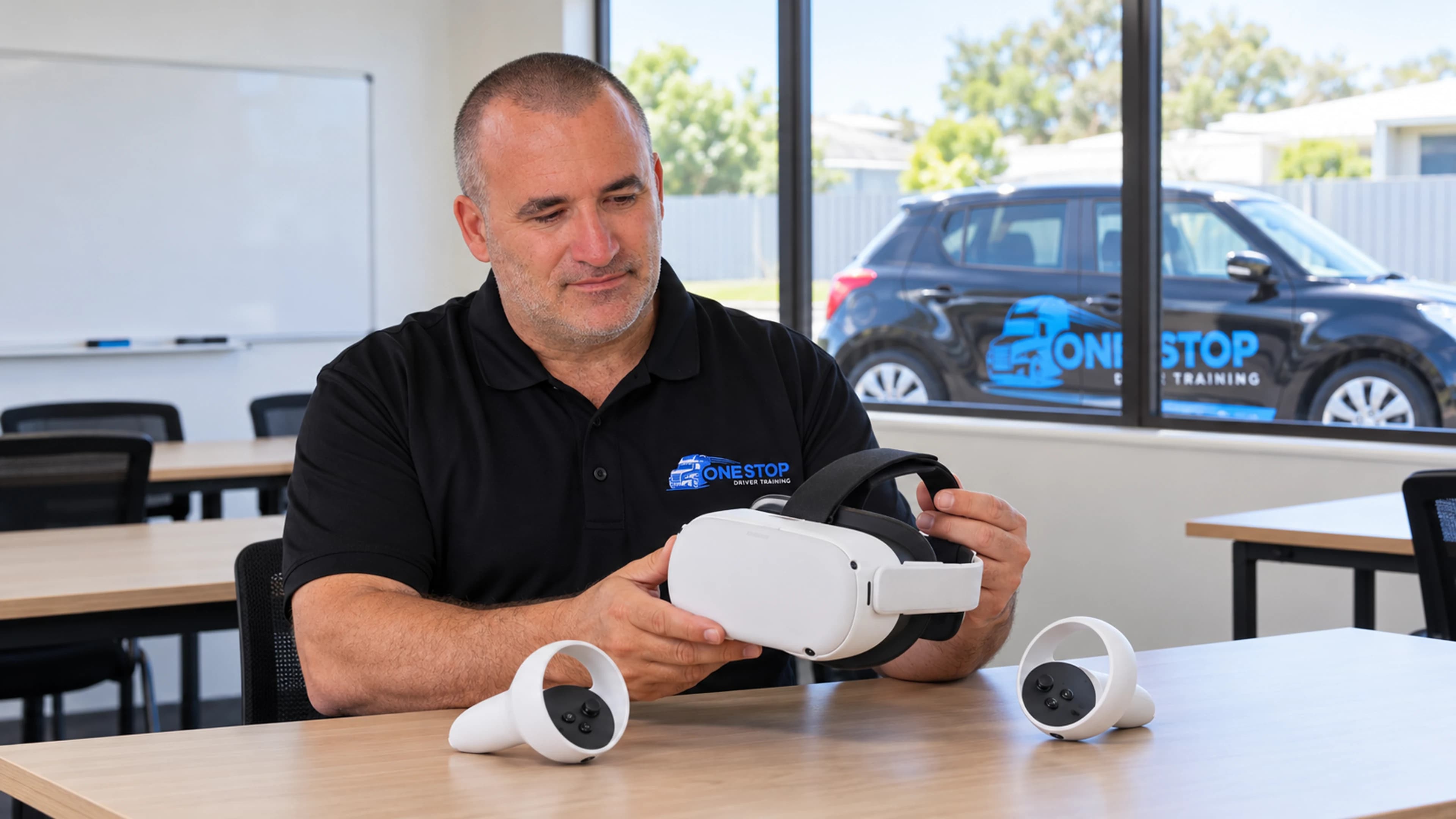
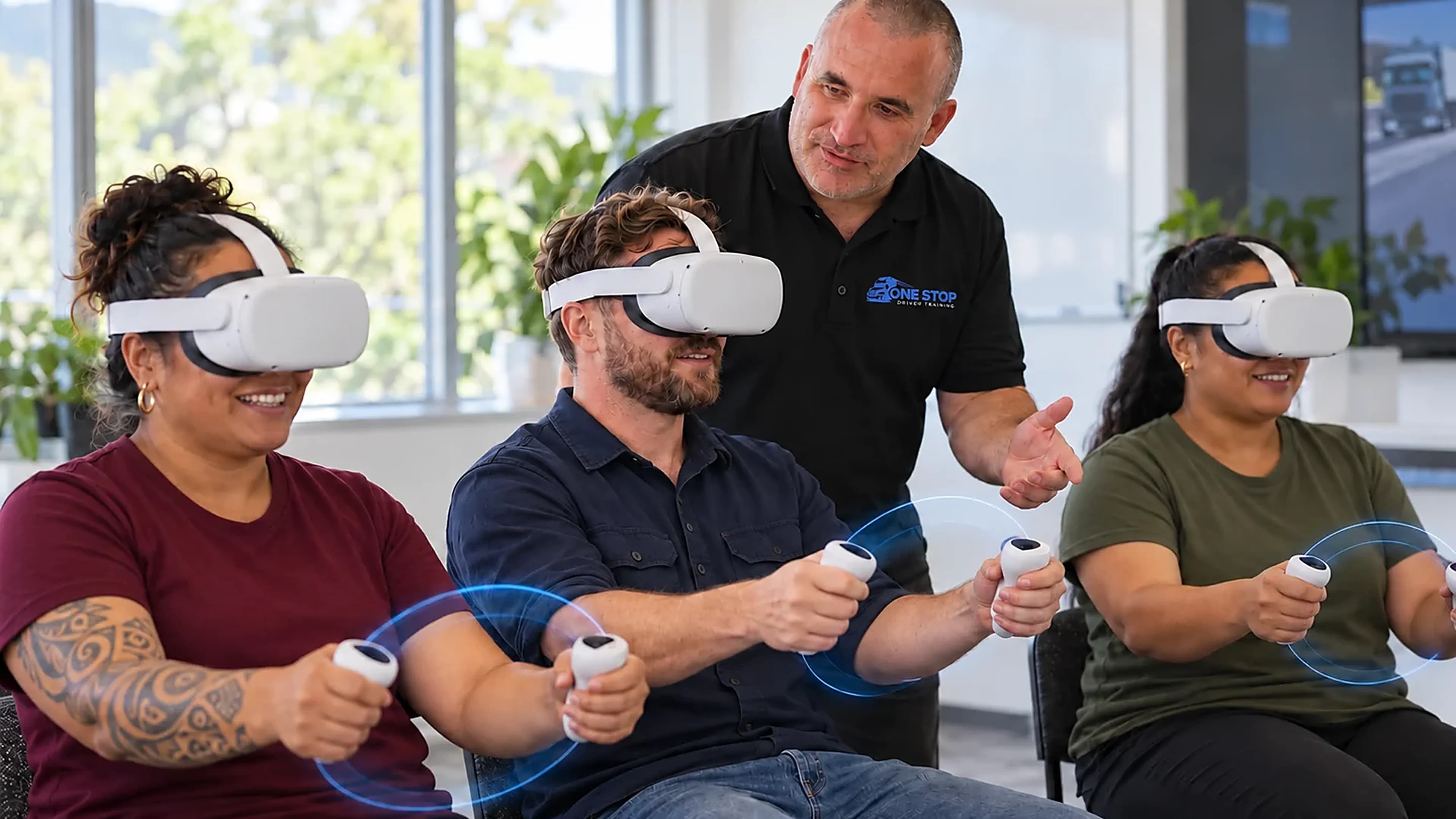
VR sessions let students explore driving scenarios and practise spotting hazards in a virtual setting, before taking those skills onto the road. Each session runs for about an hour, and One Stop recommends 10 sessions. One-off sessions are possible if spaces are available.
For a group, the team agrees the venue, dates, group size and pricing with you. For individual bookings, one session is $25.00 and 10 sessions are $250.00, including GST. Tell the team the students’ ages and licence stages, and they’ll talk through what suits them.
Hazard perception joins the restricted test in 2027, so hazard awareness is a useful early topic. VR complements awareness and decision-making practice. It doesn’t replace practical driving experience or licence requirements, so treat it as preparation alongside on-road lessons, not a replacement. Sessions cover:
- Overtaking safely
- Traffic lights and roundabouts
- Intersections with stop and give way controls
- Merging, left and right turns, lane changes and traffic flow
- Repeating tricky scenarios as often as needed
One-to-one learner lessons for students with a learner licence
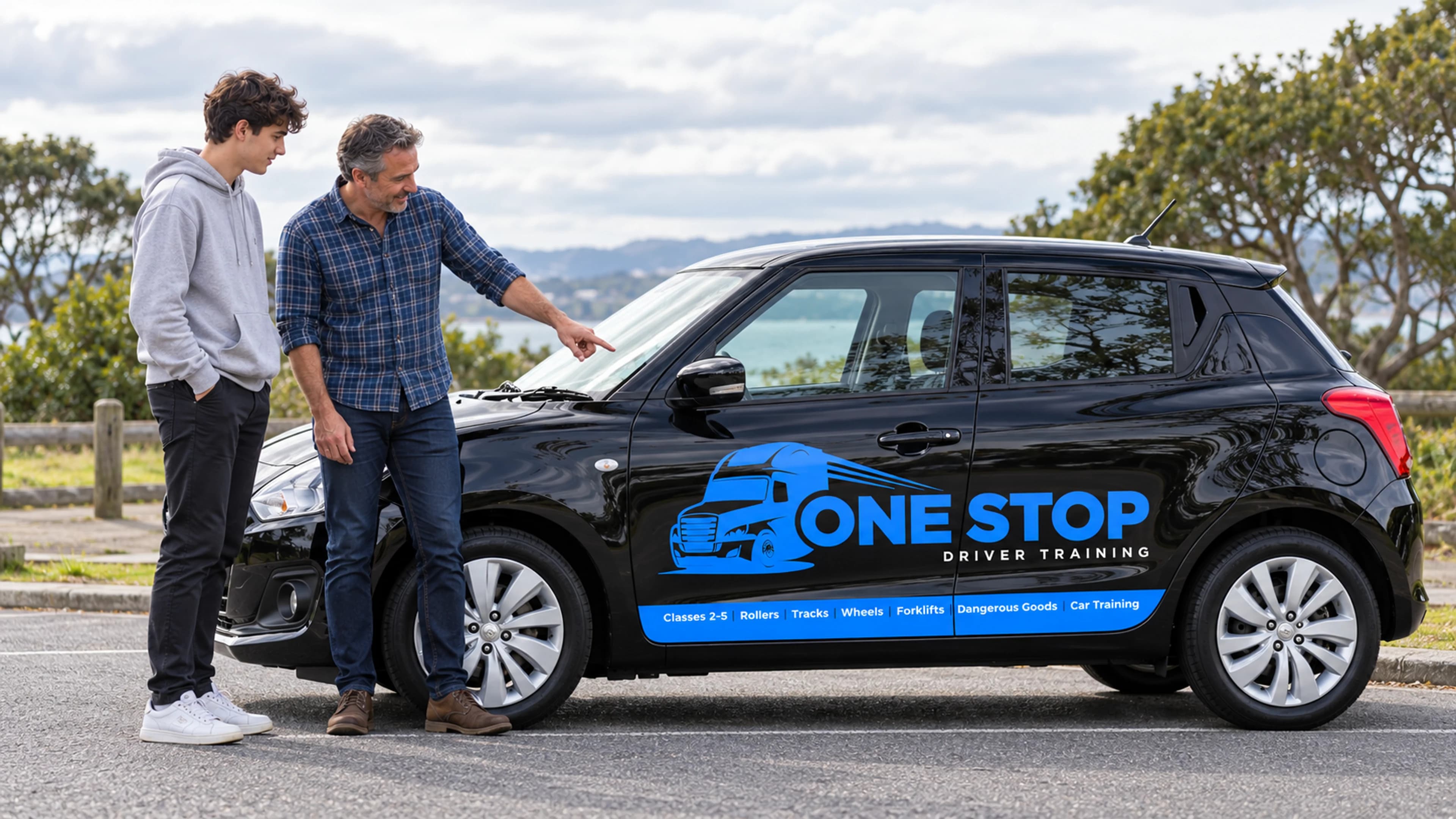
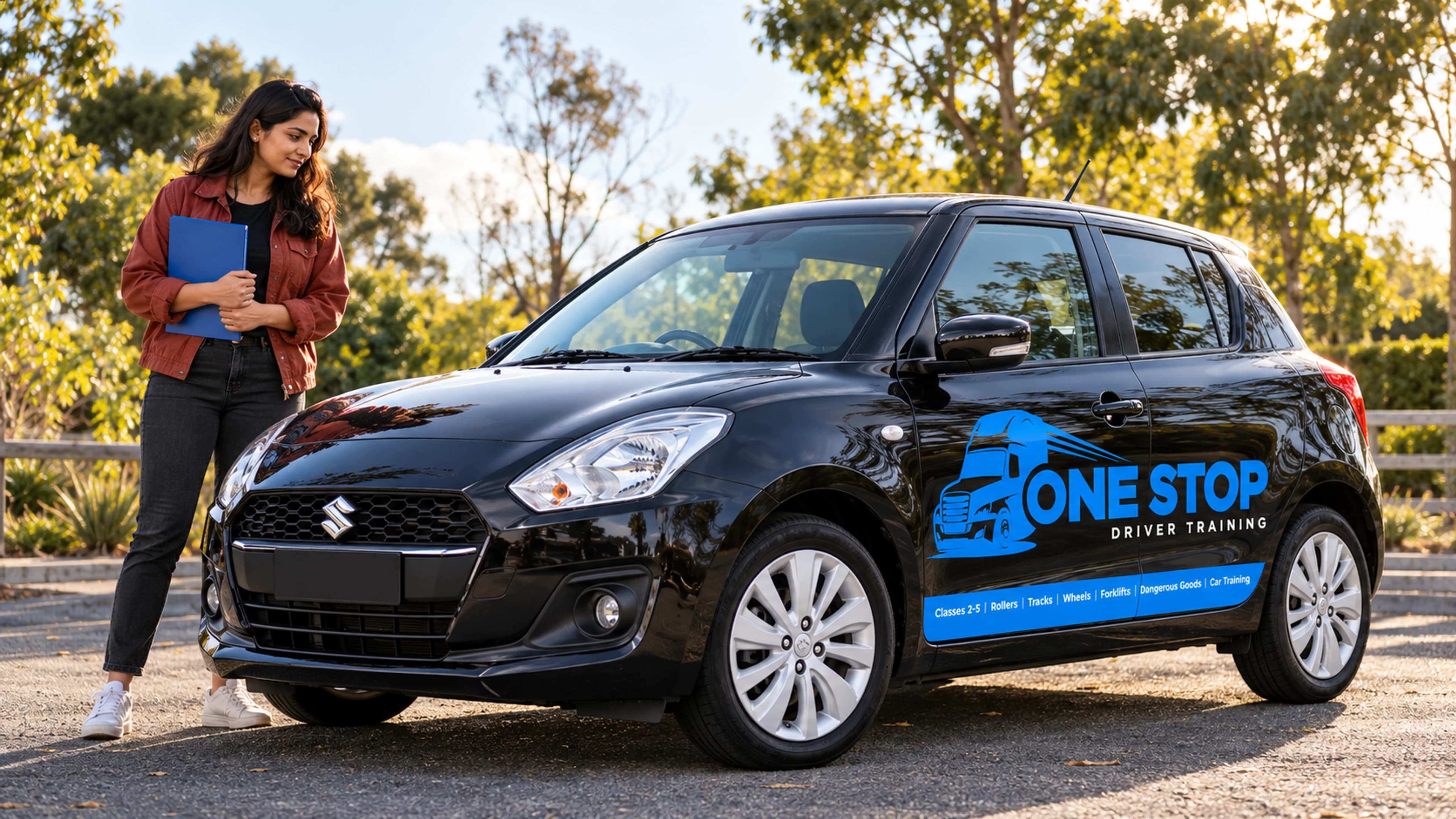
Learner lessons are one hour, one-to-one, for students who already hold a learner licence. They use One Stop’s car, a black Suzuki Swift, or the family’s own car with a current WoF, automatic or manual. There’s no set number of lessons: a student books one, then plans the rest with the instructor.
In a programme, lessons could follow a block of VR, so students take what they explored onto real roads. Early lessons cover the controls, moving off and stopping, mirrors and blind spots, intersections, roundabouts and parking. Restricted licence training comes later, on busier roads, with a focus on spotting hazards early.
Steve Wilkinson has more than 20 years in transport and supports learners who are new to speaking English. Pickup or a meeting point is confirmed for each session, around Palmerston North, Levin, Ōtaki, Paraparaumu and the Kāpiti Coast. Lesson prices include GST:
| Lesson, 1 hour | One Stop car | Your own car |
|---|---|---|
| Learner lesson | $80.00 | $80.00 |
| Restricted licence training | $80.00 | $80.00 |
What should you send One Stop to plan student training?
Send the basics in one message: how many students, their ages and licence stages, the dates you have in mind and where sessions could run. You don’t need a confirmed budget or date to start. The team talks through the options, then confirms scope, pricing and arrangements before anything is booked.
Use the enquiry form on the organisations page. There’s no payment or account needed, and an enquiry doesn’t reserve a session. Travel fees may apply outside One Stop’s area, and the team confirms any travel fee with your quote. Include:
- The number of students, and if they’re in one group or several
- Their ages, and how many are under 18
- Licence stages: no licence yet, learner or restricted
- Preferred dates, terms or days of the week
- The venue: a space you can offer, or a question about where sessions could run
- What you’d like students to gain, such as hazard awareness or readiness for lessons
- Any needs that affect how a student takes part
- A contact person for the programme
What safety and consent basics apply to students under 18?
Keep parents and caregivers informed, and get their agreement before a student under 18 takes part. Tell them what’s involved, where and when it runs, and who the instructor is. Follow your school’s or programme’s own consent process as well.
On-road lessons need a few extra details. Families should know whose car is used, where the lesson starts and ends, and how the student gets there and home. A lesson isn’t a lift unless that’s been arranged.
Supervised practice between lessons usually happens with family, so share the instructor’s practice focus with parents. Our guide to teaching a teenager to drive has a simple coaching plan for that. Before each session, check that:
- A parent or caregiver has agreed to the student taking part.
- The family knows the date, time, place and what’s involved.
- For on-road lessons, the student’s learner licence is current.
- Transport to and from the session is sorted.
- An emergency contact is on hand.
- Needs that affect how the student takes part have been shared ahead of time.
An example plan from first session to restricted test
Every group is different, so treat this as a starting point for your conversation with the team. It shows who leads each step and where One Stop could fit. For Kāpiti families, our guide to learning to drive while at college covers fitting lessons around study, sport and part-time work.
| Step | Who leads | What happens |
|---|---|---|
| Theory study | The student, with family or school support | Study the road code and pass the learner theory test |
| Group VR, if chosen | One Stop, with your school or programme | Explore driving scenarios and practise spotting hazards |
| Learner lessons | A One Stop instructor | Controls, moving off, stopping, intersections and local roads |
| Practice between lessons | A parent, caregiver or other eligible supervisor | Short drives on the focus the instructor set |
| Restricted training | A One Stop instructor | Busier roads, hazard spotting and honest feedback on readiness |
| Restricted test | The student, who books it with NZTA | From 25 January 2027, it includes hazard perception |
Common questions
Does One Stop run a schools driver training programme?
There’s no fixed schools programme. Schools, careers advisers and youth programmes can talk to the team about what could be arranged, such as group VR or learner lessons, and agree the details before anything is booked.
How long is the learner period for students from 25 January 2027?
Learners under 25 must hold their learner licence for 12 months before the restricted test, or 6 months with an approved course or 60 logged supervised hours. Learners aged 25 and over stay at 6 months.
Does VR replace on-road lessons?
No. VR complements awareness and decision-making practice, but it doesn’t replace practical driving experience or licence requirements. Students still need on-road lessons and supervised practice.
How much is a learner lesson?
A one-hour learner lesson is $80.00 in One Stop’s car or $80.00 in your own car, including GST. For a group programme, pricing is agreed with the team.
Sources and further reading
Check the linked official guidance when planning an application or test. A training booking is separate from applying for a licence.