Parents & learners
Teaching your teenager to drive: a practical coaching plan
Agree how you will communicate before the car moves. Build each practice drive around a specific task, keep a record of the help required and use an instructor when a problem repeats. Being a supportive coach means making progress visible, not taking over every decision.
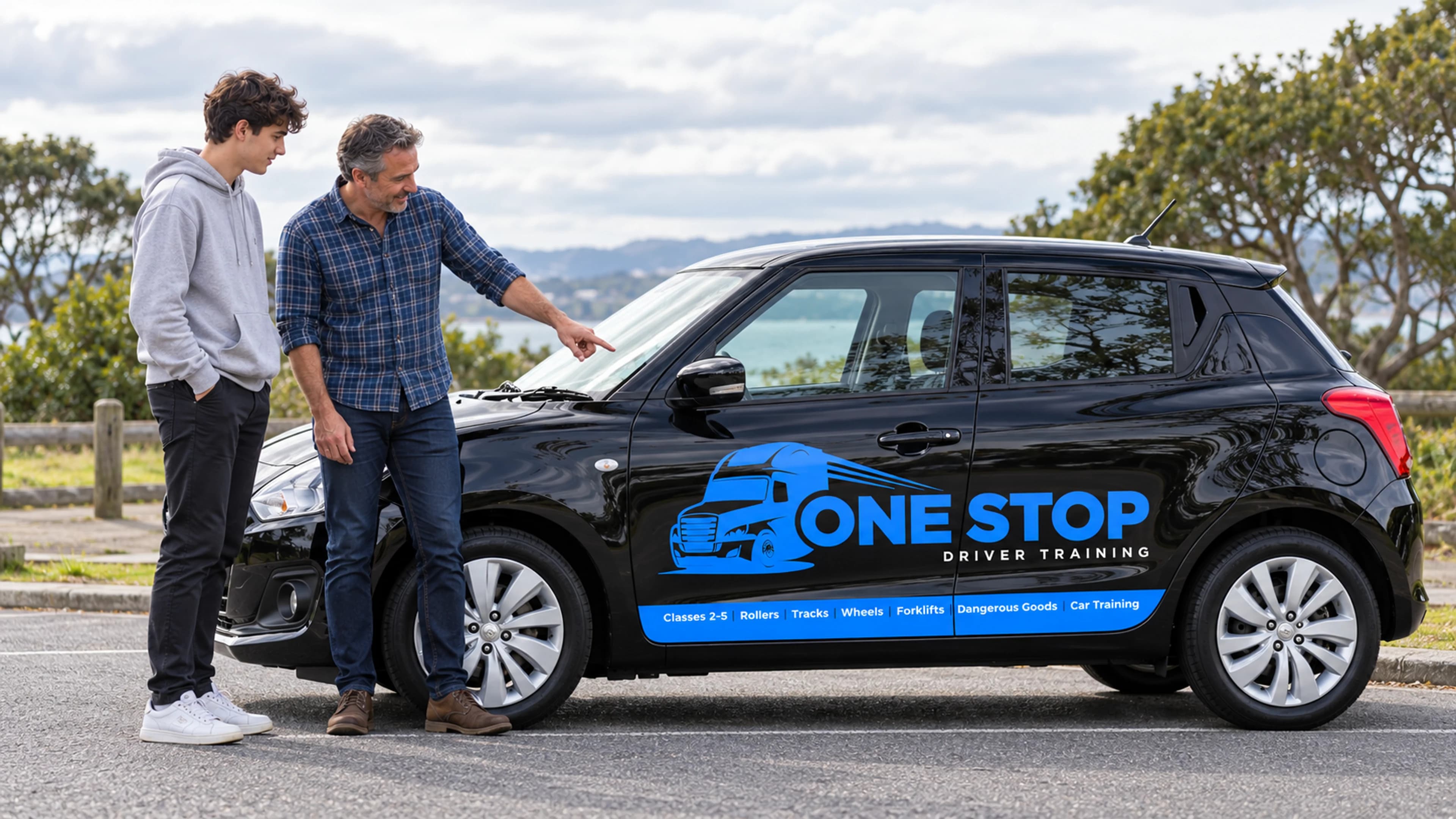
A teenager may know exactly how to answer a road-code question and still find it difficult to make a decision with traffic approaching. The family coach's job is to help connect knowledge with what is happening outside the car.
The routine below is a suggested framework for supervised practice. Adapt it with an instructor to the learner's ability and the roads available, rather than treating it as a compulsory sequence.
Agree the roles before the first drive
Confirm that you meet NZTA's supervisor requirements and that the learner's licence and conditions allow the planned practice. Do not assume that being a parent or holding a restricted licence qualifies someone to supervise. Use the official supervisor page whenever the arrangement changes.
Then agree how you will give directions and how the learner can ask for a pause. Separate an immediate safety instruction from a later coaching discussion. A short, familiar phrase is easier to recognise than a sudden explanation. The learner should also know they can say that they have not understood a direction.
Source: NZTA: Who can be a supervisor
Write a session card rather than a long lesson script
Use three lines: today's task, the help available, and a sensible place to finish. An example might be preparing earlier for familiar left turns, with the coach initially giving a route direction well in advance. Ask the instructor to confirm that the chosen activity matches the learner's stage.
Drive's planning guide recommends choosing an appropriate route and keeping the session focused. Avoid secretly adding a busy intersection because the opening minutes went well. Agree any change while safely parked so the learner understands the new task and can say whether they are ready.
Source: Drive: Planning a good practice session
Planning your training? Choose learner lessons and check the options for your next step.
Make your feedback describe something visible
A comment such as you were careless gives the learner little to work with. A more useful debrief identifies what happened: preparation started close to the junction, a reminder was needed, or attention stayed on one object. Discuss the decision and ask what information the learner was using.
Also record specific success. Perhaps the learner noticed a changing situation sooner or explained an uncertainty before acting. Avoid awarding confidence points for looking relaxed. A quiet learner may be working hard, while a talkative learner may still need substantial help. Observable actions give both of you a fairer record.
Keep a record of support, not just minutes
A practice diary can show where the learner needs assistance without becoming a report card. Use consistent descriptions such as demonstrated first, prompted during the task, or completed independently in this setting. These are your own coaching notes, not an official assessment result or a certified hours record.
Record the context as well as the action. The same task can feel different with parked vehicles, rain or unfamiliar road markings. Bring recurring patterns to the instructor rather than attempting to diagnose them from one drive.
| Note | Example entry |
|---|---|
| Focus | Preparing for a familiar junction |
| Support | One early reminder to start looking ahead |
| Context | Daylight, familiar suburban streets |
| Next discussion | Ask instructor when to vary the route |
Use a reset when either person gets overloaded
Do not try to settle a disagreement while the learner is managing a demanding situation. Give clear safety directions if needed, then arrange a safe stop. Once parked, distinguish the driving issue from how the conversation felt. Both may need attention, but they are different problems.
For the next session, reduce the number of goals or change the coaching arrangement. Ask what made the task difficult rather than simply repeating it louder. If the same misunderstanding returns, give the instructor the exact example. Drive's lesson collection can help you identify the skill area for that discussion.
Hand responsibility back in small pieces
As practice develops, invite the teenager to prepare the session card and explain what they want feedback on. The supervisor still carries their responsibilities, but the learner can take ownership of preparation and reflection. They can also bring questions from lessons instead of relying on a parent to remember them.
Plan a regular conversation about what the next stage of independence will involve: choosing a route, checking conditions and making transport plans within licence limits. Keep this separate from permission to drive alone. That permission comes from the appropriate licence and its conditions, not a successful family practice session.
Common questions
What if my teenager learns differently from me?
Ask which explanations are useful and which create confusion. Try a parked discussion, demonstration or instructor-supported practice plan. The goal is a clear decision the learner can repeat, not identical learning styles.
Should every family trip become practice?
No. A trip with an appointment deadline or several distractions may be unsuitable. Agree that the learner is practising before departure and keep an alternative driver available where appropriate.
Can a practice diary prove test readiness?
It can reveal patterns and help an instructor assess progress. It does not replace official eligibility checks or a practical assessment, and your informal notes are not automatically an approved licensing record.
Sources and further reading
- NZTA: Who can be a supervisor
- Drive: Planning a good practice session
- Drive: Driving lessons for coaches
Check the linked official guidance when planning an application or test. A training booking is separate from applying for a licence.