Local learners
Preparing for your first driving lesson: a practical guide
Prepare for a first driving lesson by confirming the booking details, having the appropriate licence ready and telling the instructor you are a beginner. You do not need to arrive already knowing how to drive. A useful first session establishes a starting point, a clear way to communicate and a manageable next learning goal.
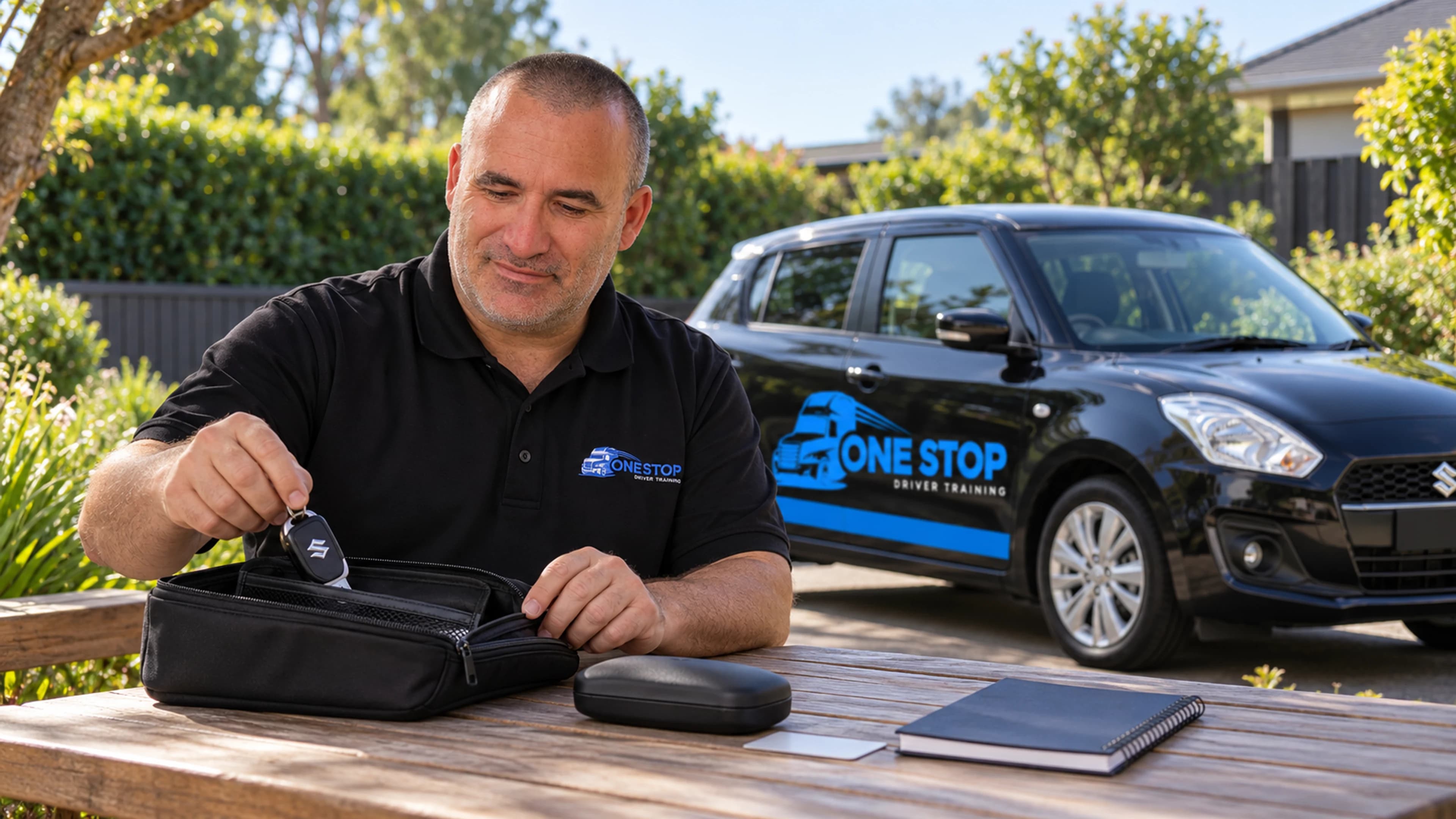
Your first driving lesson is not an audition for being a confident driver. It is a chance to understand the vehicle, explain what support you need and begin learning with guidance. Preparation should remove avoidable uncertainty, not make you rehearse skills alone before someone teaches you.
The exact content depends on the instructor, your experience and the conditions. The steps below help you arrive organised and leave with a clearer plan, without promising that every learner will cover the same tasks on the first day.
Check that you have booked the right step
Tell the provider which licence you currently hold. If you still need to complete the learner application, deal with that separately: a practical driving lesson does not issue a licence. The official NZTA learner page explains the application process and the conditions attached to learner driving.
Be clear about whether you have never driven, have tried a few supervised sessions or are returning after a break. You do not need to exaggerate your experience to avoid embarrassment. An accurate starting point helps the instructor select an appropriate plan.
Confirm the details that can create unnecessary stress
Check the date, start time, meeting point, lesson length and vehicle arrangement. Know how to contact the provider if travel is disrupted. If someone is dropping you off, make sure they have the same information rather than relying on an old message or an assumed location.
Think about practical comfort too. Choose footwear that lets you feel and operate the pedals, and avoid bringing loose items you will need to manage in the car. If you need glasses for driving or have a relevant communication need, discuss that before the session rather than waiting until the vehicle is moving.
- Booking time and exact meeting point confirmed.
- Appropriate licence and required eyewear ready.
- Vehicle and transmission arrangement understood.
- Travel and return plans allow enough time.
- Any learning or access needs discussed privately with the provider.
Planning your training? Choose learner lessons and check the options for your next step.
Tell the instructor what would help you learn
Explain whether you prefer to see a demonstration, hear a brief instruction or ask questions before trying something. You may not know your preference yet, and that is fine. Ask the instructor to check whether their explanation makes sense instead of assuming silence means understanding.
Agree on how to ask for a pause or clarification. A useful phrase can be as simple as ‘I need you to explain that again when we stop.’ Having this conversation at the beginning makes it easier to speak up later, especially if you tend to agree automatically when nervous.
Let the first lesson establish a foundation
There is no prize for covering the most distance. A session that helps you understand the controls or coordinate a basic task may be more useful than a longer journey in which the instructor has to manage every decision. Ask what the current exercise is intended to teach.
Avoid predicting the whole learning journey from one awkward moment. A new task may require several explanations, and your attention may be occupied by details that an experienced driver no longer notices. Discuss the specific difficulty while it is fresh, then ask what would make the next attempt more manageable.
Source: NZTA: Driving skills syllabus
Finish with a short learning record
Before leaving, ask for one or two priorities. Write them in your own words once you are safely out of the driving task. If your note says only ‘practise more’, ask for a more specific description. You should know which part to repeat and which part still needs instruction.
Record any questions that occurred afterwards. For example, you might realise you understood what to do but not why, or that the vehicle setup made an action uncomfortable. Bring that information to the next session. It gives the instructor a better starting point than trying to remember the entire previous lesson.
| Record | Example prompt |
|---|---|
| Something understood | What explanation made sense today? |
| Something to practise | Which exact part of the task needs repetition? |
| Something to ask | What remains unclear before the next lesson? |
Common questions
Do I need to practise before my first lesson?
You can begin as a complete practical beginner. Tell the instructor that is your starting point. Do not attempt on-road practice without meeting the licence and supervision requirements.
What if I feel too nervous to start?
Tell the instructor before the lesson. Ask how the session can begin with explanation and a manageable task. If your needs go beyond what the provider can support, discuss an appropriate next step rather than forcing the session.
Will I be driving for the entire booking?
Ask the provider how the session is structured. Explanation, setup and feedback can be useful parts of tuition. The exact balance depends on your starting point and the agreed learning objective.
Sources and further reading
Check the linked official guidance when planning an application or test. A training booking is separate from applying for a licence.